Security | Threat Detection | Cyberattacks | DevSecOps | Compliance

How Professional IT Services Help Businesses Strengthen Security and Maintain Cybersecurity Compliance

Maintaining strong Cybersecurity Complianceis no longer something organizations can treat as an occasional task. Technology supports nearly every aspect of daily operations, from communication and collaboration to customer service and data management. When systems are not properly maintained, even a small security gap can lead to disruptions, data exposure, and unexpected costs. Taking a proactive approach to technology management helps reduce risk, improve reliability, and create a stronger foundation for long-term success.
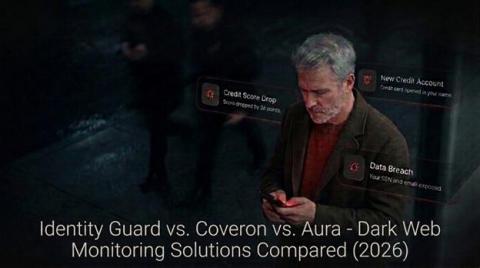
Identity Guard vs. Coveron vs. Aura - Dark Web Monitoring Solutions Compared (2026)

Dark web monitoring services differ more in what they scan and who they protect than their marketing suggests. One service leans on IBM Watson to guard against medical identity theft, another is built for personal and family protection with malware breach alerts, and a third extends its coverage to employers. Each targets a different reader, so the right pick depends on who and what you need to protect.

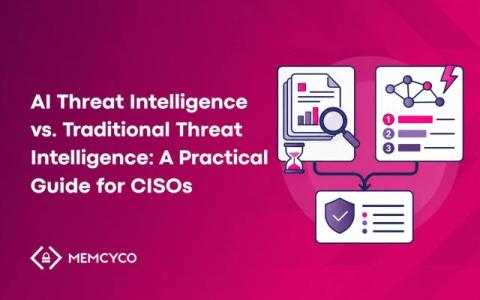
AI Threat Intelligence vs. Traditional Threat Intelligence: A Practical Guide for CISOs

Most CTI programs aren’t failing because analysts lack skill. They’re failing because signal volumes have outpaced what any manual workflow can process. Thousands of newly registered domains, phishing kit variants, and brand impersonation attempts surface daily. Human teams can’t triage all of it. Threat intelligence automation addresses the throughput problem by automating collection, enrichment and prioritization so analysts spend time on decisions, not data wrangling.

From E-Sign to RMM: DocuSign Kit Targets Windows and macOS

BlueVoyant SOC (Security Operations Center) and Threat Fusion Cell (TFC) teams are tracking a long-running phishing and remote access campaign that uses DocuSign/e-sign themed lures and a reusable web kit to drive victims into installing legitimate remote access tooling.

Best Cyber Risk Posture Management (CRPM) Platforms

The modern security landscape is an unfair fight. The perimeter is gone—replaced by a borderless terrain where a team of one to 10 is expected to defend the same footprint as a 50-person security operations center (SOC). Attack surface. Vendor ecosystem. Workforce identity. Even fully-staffed teams struggle to cover them all. For a lean team, that coverage fractures almost instantly.

Protecting Vulnerable and Poorly Configured Network Devices

On July 13, 2026, NSA, CISA, the FBI, and co-sealing partners from twelve other countries published AA26-194A, a joint Cybersecurity Advisory (CSA) warning that Center 16 of Russia's Federal Security Service (FSB) continues to exploit vulnerable and poorly configured network devices across the defense industrial base, communications, energy, financial services, government facilities, and healthcare sectors. The advisory does not reference new exploits.

What is Dynamic Access Management?

Dynamic access management replaces long-lived permissions with access that adapts to the user, task, resource, and level of risk. This guide explains how dynamic access decisions work, how they differ from traditional role-based models, and where they provide the most value across production environments, cloud infrastructure, databases, and machine identities.

What the Black Hat NOC taught me about MCP & agentic SOCs (Chapter 3 of 4)

The first time an MCP (Model Context Protocol) server felt real to me, it wasn't because of a clean demo. It was because of the noise. TL;DR: The harness matters more than the protocol, and the evidence matters more than both. MCP earns its keep when it shortens the path from a good security question to trustworthy evidence, and almost everything interesting about making that work happens in the harness wrapped around the model. In this series, I will cover how to build an MCP for an AI SOC.

The Real Cybersecurity Challenge is Operational Capacity

For years, the cybersecurity industry has assumed that the primary challenge was to see more, detect better, and deploy increasingly sophisticated tools. That paradigm no longer reflects the reality of today's cybersecurity operations. Organizations have never had so much visibility into their attack surface or so many capabilities to identify threats. However, the rapid evolution of AI is increasing the speed and complexity of attacks to a point where detection alone is no longer enough.