Security | Threat Detection | Cyberattacks | DevSecOps | Compliance

How Overreliance on EDR is Failing Healthcare Providers

Ransomware attacks have a profound impact on healthcare organizations, extending well beyond financial losses and the disrupted sleep of staff and shareholders. A University of Minnesota School of Public Health study highlighted by The HIPAA Journal reveals that these attacks can lead to higher in-hospital mortality rates for patients admitted during the incidents. Additionally, the study found that hospital volumes dropped by 17%-25% during the first week of an attack.

ServiceNow Vulnerabilities: CVE-2024-4789 and CVE-2024-5217

In late July 2024, the US Cybersecurity and Infrastructure Security Agency (CISA) added two critical vulnerabilities (CVE-2024-4789 and CVE-2024-5217) affecting ServiceNow to its list of known exploited vulnerabilities. These vulnerabilities can allow unauthenticated users to execute code remotely, posing severe risks to organizations that use the platform. The potential for unauthorized access and severe data breaches makes addressing these vulnerabilities crucial.

Achieving Complete Cyber Resilience in Healthcare

Ahead of Rubrik’s inaugural Healthcare Summit on September 12th, I thought it was appropriate to set the stage for what’s coming. Threat actors aren’t going to wait for you to get ready before they launch their attack. They’re banking on you not being able to recover your data—or not being able to recover fast enough—to maximize the damage they leave in their wake.

Cybercriminals Caught in the Trap: Infostealers Weaponized Against Hackers

In an ironic twist of fate, cybercriminals seeking to exploit stolen credentials have found themselves the targets of a new scheme. Security researchers recently uncovered a malicious campaign in which hackers were lured into downloading infostealer malware through a seemingly legitimate tool for checking compromised OnlyFans accounts. This development serves as a reminder that even those lurking on the dark web are not immune to digital risks.

Revival Hijack: How Abandoned PyPI Package Names Are Being Exploited to Deliver Malware

Security researchers have uncovered a novel and concerning method for cybercriminals to distribute malware using public code repositories. Known as "Revival Hijack," this technique involves the re-registration of previously abandoned package names on the PyPI repository. By taking advantage of the fact that PyPI allows the reuse of names from removed packages, attackers are able to slip malicious code into unsuspecting organizations.

Introduction to Amazon S3 Storage Classes

A good deal of my time and efforts in educating customers today is around object storage in general and AWS S3 in particular. In case you missed it 11:11 Systems has recently taken our partnership with AWS to the next level, making all of their S3 class storage available to you with our award winning support and flexible pricing options.

Ethical Hacking vs. Vulnerability Assessment: Understanding the Differences

In the dynamic field of cybersecurity, two essential practices stand out: Ethical Hacking and Vulnerability Assessment. Both play critical roles in safeguarding digital assets, yet they serve different purposes and employ distinct methodologies. Understanding the differences, their place in cybersecurity, and when to deploy each tactic is crucial for maintaining a robust security posture.

How to use USB devices with a VMware vSphere virtual machine

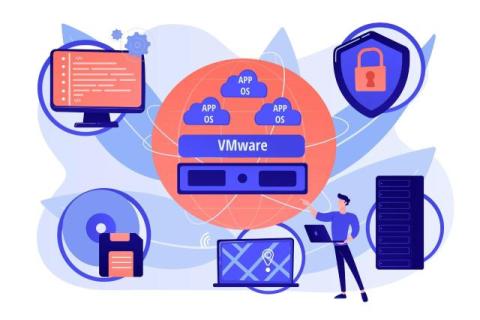
The main function of a hypervisor is to emulate the devices used by virtual machines at the software level. Devices, such as virtual controllers, disks, DVD-ROMs, video cards, network cards, input devices, etc., are created in a virtual machine. But what if you want to connect a printer, scanner, USB flash drive, USB hard drive, USB smart card reader, security dongles, USB license keys, etc.?