Security | Threat Detection | Cyberattacks | DevSecOps | Compliance

World Password Day is Dead. Long Live World Password Day!

In 2002 I sat in a local bookstore in Jackson Hole, WY that offered a few Internet-connected computers for hourly use. After chatting with the owner and petting the resident store dog, I took a few guesses at the password protecting these computers. It took me maybe 10 attempts. It was, of course, some variation of the dog’s name. While this is a very dated story, it’s this kind of story that still drives many people’s perception of why a strong password is necessary.
What is Business Email Compromise (BEC)? And How To Prevent It

Business email compromise (BEC) occurs when cybercriminals scam organizations by compromising sensitive data through email accounts for financial gain. FBI research shows that BEC is currently the most costly digital crime, far surpassing ransomware to account for US$49.2 million in victim losses in 2021. BEC is also known as email account compromise (EAC) or 'man-in-the-email' scamming.

BlackCat/ALPHV Ransomware: Cybriant Responds to FBI Warning

The Federal Bureau of Investigation (FBI) recently released a Flash Report regarding BlackCat Ransomware breaches. This ransomware as a service (RaaS) has compromised at least 60 entities worldwide and is the first ransomware group to do so successfully using RUST, considered to be a more secure programming language that offers improved performance and reliable concurrent processing.

On the Fuzzing Hook - Exploring Deeper Program States

Coverage-guided fuzzers, like Jazzer, maximize the amount of executed code during fuzzing. This has proven to produce interesting findings deep inside the codebase. Only checking validation rules on the first application layer isn’t providing great benefits, whereas verifying logic in and interactions of deeply embedded components is. To extend the amount of covered code, the fuzzer tries to mutate its input in such a way that it passes existing checks and reaches yet unknown code paths.

How and why you should secure APIs

APIs are a crucial tool in today’s business environment. Allowing applications to interact and exchange data and services means that companies can provide an ever-greater range of features and functionalities to their clients quickly and easily. So, it is no wonder that a quarter of businesses report that APIs account for at least 10% of their total revenue - a number that will only increase in coming years.

CVE-2022-23648: Kubernetes Container Escape Using Containerd CRI Plugin and Mitigation

CVE-2022-23648, reported by Google’s Project Zero in November 2021, is a Kubernetes runtime vulnerability found in Containerd, a popular Kubernetes runtime. It lies in Containerd’s CRI plugin that handles OCI image specs containing “Volumes.” The attacker can add Volume containing path traversal to the image and use it to copy arbitrary files from the host to container mounted path. The vulnerability was reported by Felix Wilhelm on Nov.

Compromising Read-Only Containers with Fileless Malware

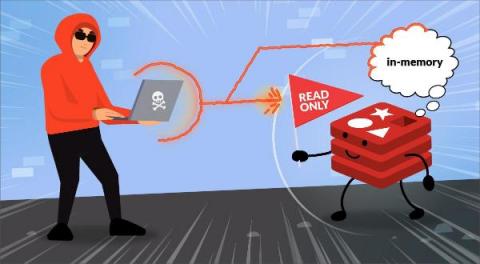
Containers provide a number of security features that are not simply available on a normal host. One of those is the ability to make the container’s root filesystem read-only. By making the file system unable to be altered, it prevents an attacker from writing their malware executable to disk. Most attacks rely on writing files in order to work, but sophisticated cases use fileless malware as part of their malicious behavior.

Ransomware Response and Remediation With a Data Observability Engine for Data Security

Ransomware can be expensive—in 2021, the average cost of a ransomware attack was $4.62million, and that doesn’t include the ransom itself. Beyond financial costs, the cost of time, data, and brand reputation can also be astronomical. According to the IST Ransomware Task Force, the average downtime can be 21 days, with full recovery taking on average 287 days from the initial ransomware incident response. And cyber criminals are getting more sophisticated every year.