Security | Threat Detection | Cyberattacks | DevSecOps | Compliance

Automate Cloud SIEM investigations with Bits AI Security Analyst

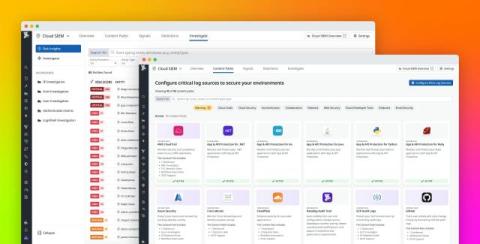
Security analysts face unprecedented challenges in today's cloud landscape. Security operations center (SOC) teams are chronically understaffed, and cybersecurity threats are skyrocketing—further intensified by GenAI-driven attacks. High false positive rates add to this strain, fueling alert fatigue and delaying the detection of real threats. These hurdles make it harder for analysts to keep pace, which ultimately drives up mean time to resolution (MTTR).

Centrally process and govern your logs in Datadog before sending them to Microsoft Sentinel or Google SecOps

Organizations rely on best-in-class solutions for observability and security, and various teams within an organization often have preferences for different platforms. For example, your security team may use a SIEM platform like Microsoft Sentinel and Google Security Operations (SecOps) to detect and investigate threats, while your DevOps teams use Datadog Log Management for real-time troubleshooting and monitoring.

Simplifying the shared responsibility model: How to meet your cloud security obligations

The shared responsibility model, introduced by AWS in 2011, defines the division of cloud security responsibilities between cloud providers and customers. Cloud providers are responsible for securing their physical infrastructure, while customers are responsible for securing their own data, configurations, and access. Cloud environments have grown and become much more complex since 2011.

Amazon SES monitoring: Detect phishing campaigns in the cloud

Amazon Simple Email Service (Amazon SES) is a cloud-based provider for sending transactional, marketing, and newsletter emails. Because of its role as a source of communication for organizations, Amazon SES has become a primary tool for phishing campaigns. Our latest threat roundup includes a key finding that Amazon SES is a common target in the initial stages of a cloud control plane attack.

Cloud SIEM and Flex Logs: Enhanced security insights for the cloud

One of the primary challenges with developing in the cloud is knowing which areas of your environment are vulnerable to risks. In order to efficiently identify and respond to legitimate risks, you need real-time visibility into security events. But traditional security platforms are costly and often standalone, which means they may create gaps in visibility.

Identify risky behavior in cloud environments

Risk assessment requires context. One of the primary challenges with protecting cloud environments is understanding how certain activity can lead to risk. Risky behavior can be categorized as any activity or action that increases the likelihood of an attack in your cloud environment. While certain activity may not be malicious on its own, it can expand an environment’s attack surface or indicate post-compromise behavior.

Strategies for accelerating a successful log migration

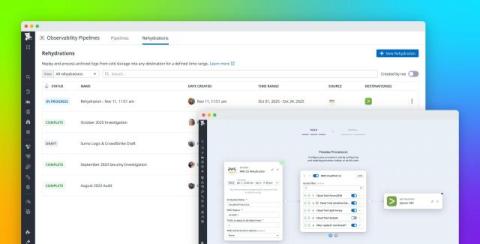
Log management becomes more challenging as both log volume and diversity rapidly grow. Yet many companies still rely on legacy log management and SIEM solutions that aren’t designed to cost-effectively or securely handle the large scale of logs today coming from sources both in the cloud and on premises.

Monitor Azure data protection services with Datadog

Azure Backup Vault, Azure Recovery Services Vault, and Azure Site Recovery make up Microsoft’s core suite of data protection and disaster recovery services. Azure’s vaults enable customers to store backups of entire Azure VMs, on-premise workloads, and workloads from Azure services such as Azure SQL Database, Azure Blob, and Azure Database for PostgreSQL. Azure Site Recovery integrates with Azure Recovery Services Vault to extend its backup services to support disaster recovery.

Security and SRE: How Datadog's combined approach aims to tackle security and reliability challenges

Security is essential to cloud-based development, but integrating it into dynamic, distributed environments is difficult. Factors like complex architectures and operational constraints often create roadblocks, which makes it harder to enforce security policies and mitigate threats. These challenges are especially apparent within security organizations, where siloes limit their ability to keep pace with the larger organization as it scales.

Reduce costs and enhance security with cross-region Datadog connectivity using AWS PrivateLink

Modern cloud architectures are increasingly distributed, with applications and services spanning multiple regions to improve availability, reduce latency, and support disaster recovery. Many of our customers rely on solutions like Virtual Private Cloud (VPC) peering, Network Address Translation (NAT) gateways, and AWS Transit Gateways to securely send telemetry to Datadog across regions. These methods work but can add complexity, increase costs, and create potential security risks.