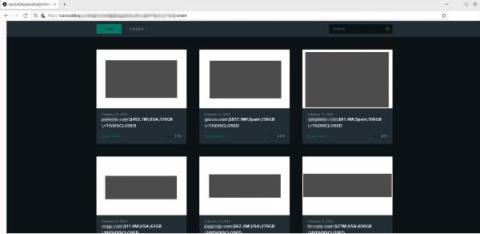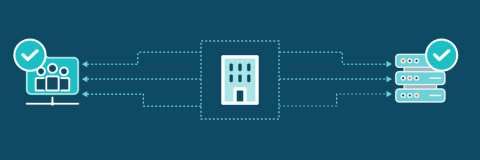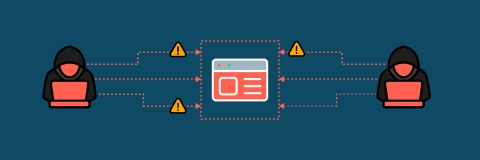
Googling your organization’s name will bring up all sorts of information. However, there’s more to the internet than the surface web that’s accessed through regular search engines: the deep web and the dark web. To stay ahead of potential threats and maximize incident response performance, security teams need a complete view of their organization’s presence across all areas of the internet.
Coming into 2023, we predicted that the economic downturn would fuel sophisticated fraud, the growth of serverless workloads will increase the attack surface, and there would be more MFA bombing attacks. As we look to 2024, Outpost24’s team of security experts have predicted the emerging threats that will shape the cybersecurity landscape. Dark AI tools, and a shift in security priorities are some of the challenges that organizations will face.
Building trust with customers often starts by demonstrating the right security controls. In the digital age, data security is paramount, and adherence to standards like ISO/IEC 27001, PCI DSS, and SOC 2 has become a key differentiator in the competitive market landscape.
During a recent penetration test on a customer application, I noticed weird interactions between the web front-end and back-end. This would eventually turn out to be a vulnerability called HTTP request smuggling, enabled by the fact that the front-end was configured to downgrade HTTP/2 requests to HTTP/1.1. With the help from my colleague Thomas Stacey, we were able to construct an exploit chain with response queue desynchronization along with traditional HTTP/1.1 request smuggling techniques.
The Malware-as-a-Service (MaaS) model, and its readily available scheme, remains to be the preferred method for emerging threat actors to carry out complex and lucrative cyberattacks. Information theft is a significant focus within the realm of MaaS, with a specialization in the acquisition and exfiltration of sensitive information from compromised devices, including login credentials, credit card details, and other valuable information.
You have kicked-off your annual application security assessment, but by the time the final report comes in, so have a bunch of new features from your developers. Since your pen test report can’t keep-up with your modern development cycles, it is now (and always) obsolete. You can check-off your compliance checkbox, but you’re not anymore secure than you were before. If this sounds familiar, it is clearly time for an update.
Philadelphia, PA, November 9, 2023 – Leading cyber risk management and threat intelligence provider Outpost24 today announced the release of Threat Explorer, an advanced vulnerability intelligence and custom alerting tool for continuous threat monitoring.
Broken access control, the vulnerability category consistently ranking on the OWASP Top 10 Web Application Security Risks list, poses the most significant challenge for application security right now. Over-reliance on automated solutions to tackle these challenges creates a false sense of security and could have severe implications for application owners.
Earlier this month, the District of Columbia Board of Elections (DCBOE) warned that a threat actor may have gained access to the personal information of their registered voters. This would include personally identifiable information (PII) such as contact details, partial social security numbers, dates of birth, and driver’s license numbers. In an X post on Friday 20th October, the agency was keen to stress that it was only a possibility the voter roll had been accessed.