Security | Threat Detection | Cyberattacks | DevSecOps | Compliance

How to Monitor MCP Usage: A 10-Step Security Checklist for 2026

What you need to know: MCP can evade traditional DLP, IAM, and SIEM controls because agent traffic looks like authorized API calls, sensitive data is semantically transformed before it leaves the perimeter, and exfiltration happens through tool invocations rather than file transfers.

AI Agents are moving your sensitive data: Nightfall built a solution where DLP fails

Somewhere in your environment right now, an AI agent is reading files, querying a database, and passing output through a channel your DLP has never seen. It's running under a legitimate user credential, inside a sanctioned tool, and it will not trigger a single alert. When it's done, there will be no record of what it accessed or where that data went. This is not an edge case. It is the default state of most enterprise environments in 2026.

You Can't Secure AI Agents You Haven't Found

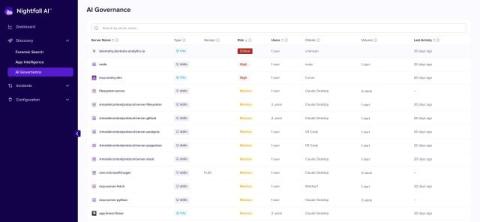
Most organizations have a reasonable handle on their sanctioned SaaS apps. Model Context Protocol - hit 10,000 public servers within a year of launch, with 97 million monthly SDK downloads. None of those numbers capture the servers your developers configured locally. Those don't appear in any registry. They were added at the IDE level, one developer at a time, with no approval step and nothing that touches a central system. That's the inventory problem. It comes before any question of enforcement.

How Do AI Agents Create Data Exfiltration Risk?

AI agents create data exfiltration risk by combining three capabilities that are dangerous together: access to private data, exposure to untrusted content, and the ability to communicate externally. When all three exist in one agent, an attacker can hide instructions inside an email, document, or webpage the agent processes and trick it into sending sensitive data out. No software vulnerability is required. The attacker doesn't need to break in. They just need to talk to your agent.

After the Vercel Breach, Do You Know What Your AI Tools Can Access?

In April 2026, Vercel disclosed that attackers had accessed internal systems and customer credentials — not by breaking into Vercel directly, but by compromising a third-party AI tool one of its employees had connected to their corporate account.

Browser AI Plugins, Agentic AI, and MCP: The 3 Blind Spots Legacy DLP Can't See

A recently patched Google Chrome vulnerability is a signal security leaders cannot ignore. But it's only the beginning of a much larger story. In January 2026, a high-severity vulnerability was disclosed in Chrome's Gemini AI integration: CVE-2026-0628. The flaw allowed a malicious browser extension with only basic permissions to escalate privileges and gain access to a user's camera, microphone, local files, and the ability to screenshot any website, all without user consent. Google patched it quickly.

Powering Wider Global DLP Coverage with Three New Detectors from Nightfall

‍A DLP solution is only as strong as what it can detect. Gaps in detector coverage aren't just a technical inconvenience; they're exposure windows. Every format that goes unrecognized is a policy that can't fire, a remediation that can't happen, and a breach waiting to occur. Three new detectors are now available in Nightfall: personal photos (selfies and headshots), Malaysian Driver's License numbers, and South African National ID numbers.