Security | Threat Detection | Cyberattacks | DevSecOps | Compliance

Automating security questionnaires with open APIs: Trends in 2025

In this article Chief information security officers (CISOs) are continually tasked with understanding and deploying innovative solutions that reduce risk while increasing operational efficiency. As organizations expand their reliance on digital data and cloud-based infrastructures, the volume and complexity of security questionnaires have grown exponentially. In this environment, modernizing and streamlining these questionnaires is not simply about efficiency; it is a strategic imperative.

How to build a unified control framework for multi-standard compliance

In this article Businesses face an increasingly complex environment when it comes to compliance. With multiple standards emerging from different jurisdictions and regulatory bodies, achieving operational efficiency while ensuring regulatory adherence can be challenging. A Unified Control Framework (UCF) designed to handle multi-standard compliance is not just a technical solution; it is a leadership imperative that demands vision, collaboration, and robust strategies.

GDPR, CCPA, and ISO 27701: Harmonizing global data privacy compliance

In this article Data has become one of the most valuable assets for organizations. The increased flow of personal information across borders has compelled regulatory bodies and industry standards to introduce robust data privacy frameworks. Three prominent instruments that have emerged on the global stage are the European Union’s General Data Protection Regulation (GDPR), the California Consumer Privacy Act (CCPA), and the International Organization for Standardization’s ISO 27701 standard.

Third-party risk is everyone's problem: What CISOs need to know now

In this article The alarm wasn’t a breach. It was an invoice. A mid-sized enterprise onboarding a new analytics vendor found themselves tangled in a post-implementation scramble: customer data had been shared without encryption, the vendor’s security posture was based on trust alone, and legal had skipped the SLA review because “they’d worked with them before.” What followed wasn’t a data loss, but something quieter and more corrosive, an erosion of confidence.

Leveraging AI to reduce cybersecurity costs and risks: A CISO's guide

In this article Chief Information Security Officers (CISOs) face a dual imperative in the digital landscape of today: safeguarding their organizations from an ever-evolving threat landscape while managing escalating security costs. Artificial Intelligence (AI) offers transformative potential in meeting these challenges by automating threat detection, streamlining compliance, and optimizing resource allocation.

How CISOs are using AI to automate risk assessments in 2025

In this article In 2025, the role of the Chief Information Security Officer (CISO) and compliance leadership has become even more critical in ensuring that risk assessments are not only comprehensive but also agile and adaptive. Artificial Intelligence (AI) has emerged as a transformative force in cybersecurity, enabling risk assessments to be automated, more accurate, and proactive.

Third-party risk management: Trends, tech, and what's next

In this article There’s a silent shift happening in boardrooms, risk teams, and procurement departments across counters, and it’s reshaping how companies think about their vendors. Third-party risk used to be a compliance afterthought, reduced to a stack of spreadsheets and annual checklists. But not anymore.

ISO 42001 & NIST AI RMF: Practical steps for responsible AI governance

As artificial intelligence continues to reshape industries, responsible governance has emerged as a business necessity. Organizations deploying AI face the challenge of maintaining innovation while mitigating risks related to bias, data privacy, security, and transparency. Two major frameworks – ISO 42001 and NIST AI Risk Management Framework (AI RMF)—have been developed to help businesses navigate this balance.

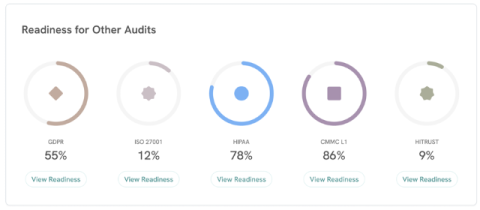
Continuous audit readiness: Multi-frame compliance for strategic advantage

Navigating the business environment calls for a proactive approach to risk management—particularly through continuous audit readiness. This strategy not only assures compliance across multiple frameworks, but it also drives operational efficiency, protects brand reputation, and supports strategic decision-making initiatives.

SOC 2 complete guide

SOC 2 compliance is no longer a “nice to have” – it’s an essential requirement for SaaS providers and service organizations handling sensitive client data. Whether you’re a startup looking to build credibility or an established firm entering enterprise deals, SOC 2 offers a structured framework to demonstrate your commitment to security, privacy, and operational integrity.