Security | Threat Detection | Cyberattacks | DevSecOps | Compliance

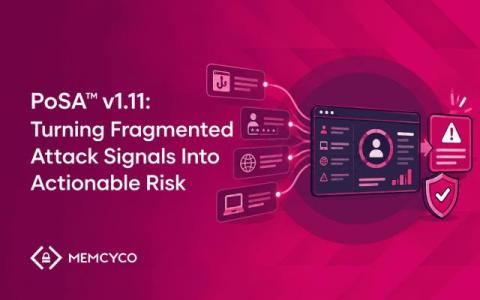
PoSA v1.11: Turning Fragmented Attack Signals Into Actionable Risk

With PoSA v1.11, we focused on a practical problem: detecting more attack activity does not necessarily help fraud and security teams make better decisions. PoSA already identifies activity across digital impersonation, credential theft, attacker devices and account access. The challenge is making the connections between that activity easier to understand, identifying which users and devices require attention, and making that intelligence available to the systems and teams responsible for responding.
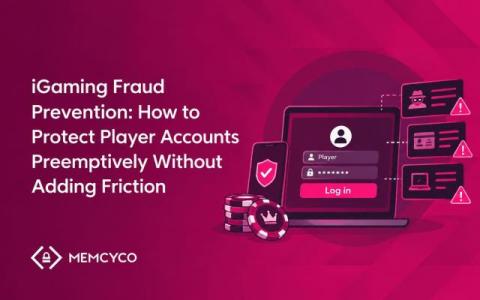

iGaming Fraud Prevention: How to Protect Player Accounts Preemptively Without Adding Friction

iGaming fraud prevention does not have to mean applying more security checks broadly across the player journey. For player account takeover, the better objective is to obtain enough reliable risk context early enough to reserve additional checks for the accounts and access attempts that actually warrant them. The commercial stakes are growing alongside the market. U.S. iGaming revenue reached $10.73 billion in 2025, up 27.6% year over year, according to the American Gaming Association.

Online Gambling Fraud: How Fake Sites, Apps and Social Ads Divert Player Deposits

Online gambling fraud includes more than bonus abuse, payment fraud, account takeover and suspicious withdrawals on a genuine betting platform. Fake gambling sites, cloned apps and deceptive social ads can capture players before they reach that platform, diverting registrations, credentials and deposits into an attacker-controlled or unlicensed environment.

How to Reduce Payment Fraud Risk Without Adding Customer Friction

Reducing payment fraud risk requires giving existing fraud controls enough context to distinguish higher-risk interactions from routine activity, rather than applying more checks to every customer. That distinction matters. UK Finance reported that criminals stole almost £1.3 billion through authorized and unauthorized fraud in the UK during 2025. Authorized push payment fraud alone accounted for £576.4 million, up 19% year over year.

Brand Impersonation Protection Software: What to Look For Beyond Domain Takedown

Brand Impersonation protection software should do more than find and remove impersonating assets. Buyers should also examine what a platform helps their organization understand and do about the customer and business risk created while the campaign remains active. The Anti-Phishing Working Group recorded 971,181 phishing attacks in Q1 2026, up 13.8% from the previous quarter. Across monitored social platforms, impersonation accounted for 43.8% of threats. Takedown is necessary.

How to Identify Users Exposed to Brand Impersonation Attacks

Most organizations have become better at finding brand impersonation attacks. They can detect fake domains, identify cloned websites, report phishing pages, initiate takedowns, and warn customers when an impersonation campaign becomes visible. That work matters. But it does not answer the question that often matters most once the attack is live: Which users were exposed? Finding fake sites is only half the problem. Understanding who encountered them is where effective protection begins.

Evil Twin Attack: What It Is, How It Works, and Why Your Customers Are the Target

An evil twin attack is a man-in-the-middle attack in which an attacker creates a rogue wireless access point that impersonates a legitimate network. Victims connect believing the network is genuine, allowing the attacker to intercept traffic or present fraudulent login experiences designed to capture credentials. Evil twin attacks have traditionally been treated as wireless-security incidents. For enterprises with large customer bases, however, the consequences extend well beyond the network layer.

AI Threat Intelligence vs. Traditional Threat Intelligence: A Practical Guide for CISOs

Most CTI programs aren’t failing because analysts lack skill. They’re failing because signal volumes have outpaced what any manual workflow can process. Thousands of newly registered domains, phishing kit variants, and brand impersonation attempts surface daily. Human teams can’t triage all of it. Threat intelligence automation addresses the throughput problem by automating collection, enrichment and prioritization so analysts spend time on decisions, not data wrangling.

How Threat Intelligence Automation Helps Security Teams Prioritize External Threats

Phishing sites now live for under 24 hours. By the time a manual review cycle completes, the credential harvesting is done. That window is why threat intelligence automation has moved from a nice-to-have to an operational necessity for security and fraud teams managing external threats. Threat intelligence automation solves the prioritization problem by enriching raw signals before they reach analysts.

How Brand Impersonation Leads to Account Takeover (ATO)

Brand impersonation and account takeover (ATO) are often treated as separate security problems. One is viewed as a phishing or brand abuse issue. The other is viewed as an authentication or fraud issue. Attackers often see them differently. Many ATO attacks begin long before a login attempt appears on a dashboard. They begin when a customer encounters a fake website, fraudulent search result, impersonating social media profile, cloned mobile app, or spoofed communication that appears legitimate.