Security | Threat Detection | Cyberattacks | DevSecOps | Compliance

How to Get Your Information Off the Dark Web: Steps to Take

Seeing your personal data exposed on the dark web would certainly make you hit the panic button. But instead of panicking, you should focus on how to get your information off the dark web. The sooner you take a suitable action, the lower the chances of damage to your data, finances, and reputation. Let’s find out more about how data gets leaked on the dark web and how it can be taken down.
How Can AI Be Used in Phishing Attacks?

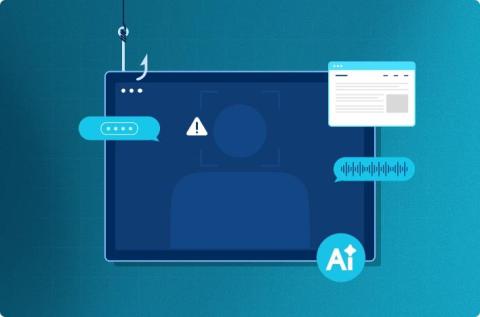
Phishing is the most common type of cyberattack, occurring when an attacker impersonates a trustworthy entity with the intention of carrying out fraudulent activity. Phishing is done with the motive of stealing sensitive information such as passwords, credit card numbers, and other personal data. Phishing was already quite threatening, but with the inception of Artificial Intelligence (AI), it became even more dangerous.

Managed Network Detection and Response: How It Works and Why Organizations Rely On It

Organizations today depend heavily on connected systems, cloud applications, remote users, and third-party services for their online security. In most cases, attacks do not start with an apparent alert on an endpoint. They often originate in the network in the form of a strange connection or an unusual traffic route. These signs are subtle and easy to overlook until the attacker has infiltrated further. Most IT teams try to keep an eye on this activity, but monitoring a network 24/7 is not feasible.

Managed Detection and Response Cost: What Organizations Should Expect

For many organizations, managed detection and response has become an essential service. With threats getting more deceptive and spreading at a faster rate, most IT/security teams are unable to investigate every suspicious event due to a lack of time or resources. This is why many organizations explore MDR, but they often don’t know how much managed detection and response would cost.

How AI-Driven Attacks Are Putting Gmail Security At Risk

Gmail has always been a common target for cybercriminals, and with the arrival of advanced AI tools, the threat level has increased significantly. Now, attackers no longer rely on generic phishing emails or scam methods. They are using AI to create convincing messages and imitate real support agents to make attacks look more genuine. This change in attack patterns has made Gmail users more vulnerable because they can’t differentiate between real and fake messages.

What is Ransomware-as-a-Service? How It Happens and How to Defend Against It?

Cyberattacks are becoming more advanced and threatening with every passing day. Even if you have a reliable security system in place, the risk of cyberattacks remains. Of all the cyberattacks, Ransomware is perhaps the most dangerous because it causes both data and financial loss. It started as simple encryption malware, but over the years, it has turned into a full-scale business model known as Ransomware as a Service (RaaS).

What is a Salami Attack in Cyber Security? How to Detect and Prevent this Attack?

A cyberattack is a malicious and intentional attempt by an individual or organization to compromise the information system of another individual or organization. Attackers use different methods to gain unauthorized access to the victim’s system and steal sensitive data. One of the most innovative types of cyberattacks is known as a ‘Salami attack’. In this attack, criminals steal small amounts of data and funds from multiple accounts over time without being detected.

Deep Web Vs Dark Web: Key Differences and Safety Concerns

The internet we use every day is just the tip of the iceberg. It’s called the “Surface Web”. Beneath the surface web lies a vast hidden layer where legal and illegal activities sometimes take place anonymously. This hidden layer includes two key areas: Deep Web and Dark Web. Both are linked to online anonymity, but they serve different purposes. Understanding deep web vs dark web is important for staying informed and safe online.

What is Threat Assessment in Cyber Security? Key Steps & Best Practices

Having a strong cybersecurity foundation is essential for every organization today. Even a small gap can become an open door for cybercriminals, leading to costly damage and data loss. This is why every organization needs a solid security strategy based on proper threat assessment and other key elements. But what exactly does threat assessment in cybersecurity mean? Let’s find out everything in detail in this blog.

What is Cyber Threat Hunting Process? How to Build & Implement Threat Hunting

Cyberattacks are becoming more frequent and advanced with each passing day. It won’t be enough to rely solely on automated security tools for protection against these attacks. You need to bring threat hunting into your security strategy. This proactive approach will help identify threats before they can cause real damage. In this blog, you will learn about the cyber threat hunting process, the professionals involved, and why it should be implemented in your company.