Security | Threat Detection | Cyberattacks | DevSecOps | Compliance

Difference between Network DLP vs Endpoint DLP vs Cloud DLP

When it comes to protecting business-sensitive data, understanding the difference and the scope of Network DLP, Endpoint DLP, and Cloud DLP is essential. Each of these Data Loss Prevention solutions (DLP) plays a unique role in securing data across various environments, whether it is on the Network, on individual devices, or in the Cloud. Knowing how each solution works can help you determine the best approach to safeguard your organization's sensitive information.
What Is Kiosk Mode and How Does It Work?

Customer engagement plays a major role in how businesses retain users and build lasting relationships. Whether it’s a retail store, a logistics operation, or a healthcare facility, the way people interact with devices directly impacts efficiency and experience. This is where kiosks come in. Modern businesses increasingly rely on POS and kiosk-driven interactions to simplify workflows and improve customer satisfaction.

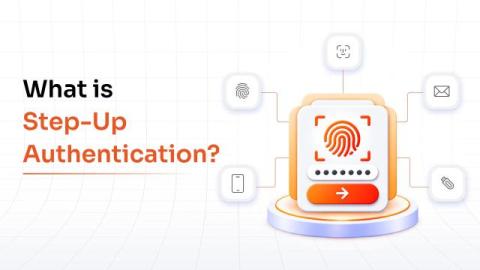
Step-Up Authentication: How It Works, Use Cases and Benefits

A user signs in to an application and gets access to the dashboard. Later, the same user tries to change account settings or approve a high-value transaction. Suddenly, another verification step appears. Why? The risk has changed. Routine access and sensitive actions do not need the same level of protection. Step-up authentication lets organizations add stronger verification when users cross a higher-risk threshold, while keeping everyday access simple.

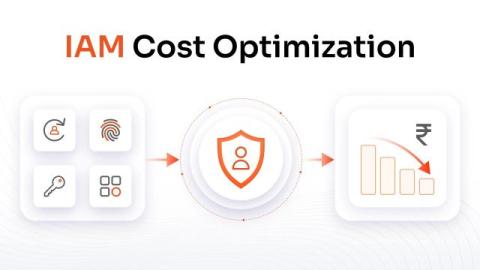
IAM Cost Optimization: How to Reduce Identity Management Spend Without Sacrificing Security

According to Gartner survey data, 56% of CISOs increased their IAM budgets in 2026 compared to 2025 to curb evolving threats, support AI adoption, and manage complex digital ecosystems. The question is: can IAM cost be optimized without reducing security quality? There are instances where organizations keep paying for overlapping tools, manual provisioning workflows, and help desk tickets that a properly automated platform would eliminate outright.

What Is Exact Data Match (EDM)? How It Works & Why It Matters

Every security team has lived through this problem: an employee books a flight with a personal credit card, and the DLP system flags the transaction, simply because the card number matches a predefined pattern. So, when multiple alerts accumulate, security teams often spend time investigating false positives rather than addressing genuine data leaks. This is precisely the problem Exact Data Match (EDM) was built to solve.

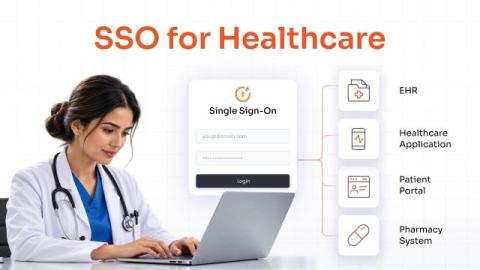
SSO for Healthcare: HIPAA-Compliant Single Sign-On for Healthcare Organizations

Healthcare workers move between EHRs, clinical applications, imaging systems, telehealth platforms, and administrative tools throughout the day. When every system requires separate authentication, access becomes a recurring interruption and identity management becomes fragmented. SSO for healthcare brings authentication into a centralized identity layer, allowing authorized users to access multiple applications through one authentication experience.

Identity Fundamentals: Understanding Digital Identity and IAM

Every login, every API call, and every file someone opens starts with the same two questions: who is this, and what are they allowed to do? Those questions matter more than they used to. Networks no longer have a clean perimeter, applications run across cloud and on-premises environments, and users connect from anywhere. Identity is now what decides whether a request is allowed through.

What Is Provisioning? Definition, Types, Process & Benefits

Provisioning is the process of setting up IT resources and making them available for use. It can apply to servers, networks, applications, cloud infrastructure, devices, and user access. In identity and access management (IAM), provisioning refers to creating, modifying, and managing user accounts and their access to applications, systems, and resources.

Hashing vs. Encryption: Differences, Use Cases, & Role in IAM

Your passwords, login tokens, and personal information need protection when you use an online service. Two technologies that help protect this information are hashing and encryption. Identity and Access Management (IAM) incorporates both, but they solve different security problems. Hashing helps verify passwords and detect changes to data. Encryption protects sensitive information that authorized users or systems need to retrieve. Understanding hashing vs.

Why Privileged Access Management Is Essential for GCC Organizations

Gulf Cooperation Council (GCC) enterprises are rapidly adopting cloud technologies and rolling out massive AI initiatives, with many moving from pilots into production. More systems now connect through APIs. That progress also expands your privileged attack surface. When you give users unchecked access to critical systems, even one compromised identity can bring everything down.