Security | Threat Detection | Cyberattacks | DevSecOps | Compliance

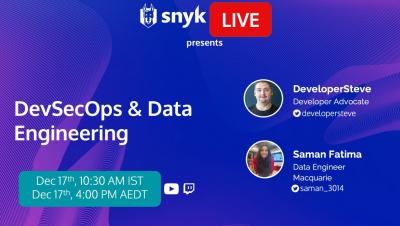
DevSecOps and Data Engineering

As security is adopted more in the shift left devsecops approach it brings with it a re-examining of the full SDLC. This is increasingly important not only as part of security policies and app handling but also ensuring the protection of infrastructure, data and end user app experiences. In this Snyk Live episode we are joined by Saman Fatima, sharing experiences around security practices and approach. Looking at DevSecOps practices like IAM and how security can apply to data engineering.

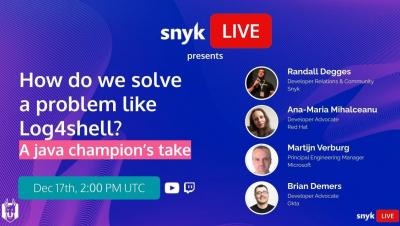
How do we solve a problem like Log4shell?

With the infamous Log4shell vulnerability spread far and without any direct fixes available yet, what do we do? Our panel of Java champions discuss the immediate reality, the near term solutions, and how the community can help itself and its members Speakers Host - Randall Degges | Head of Developer Relations & Community at Snyk Ana-Maria Mihalceanu | Developer Advocate Red Hat Martijn Verburg | Principal Engineering Group Manager (Java) at Microsoft


What has the Log4shell vulnerability taught us about application security?

A week ago, we had no idea what Log4shell was. Today, we have the global developer community coming together to keep itself safe from a vulnerability that ranks the highest in terms of risk. We need technical solutions, but what does it mean for the landscape of application security, and what have we learned from this situation?

Log4Shell: What You Need to Know About the Log4j Vulnerability (APJ)

A new critical vulnerability, Log4Shell, was publicly disclosed on December 10th and is making global headlines. It impacts a wide amount of applications on the internet, allowing attackers to remotely execute code within vulnerable applications worldwide. In this webinar recording, Snyk technical experts provide an in-depth technical review of the Log4Shell vulnerability, what caused it, how it can be exploited, and most importantly, how it can be mitigated through upgrades, or defended against in WAF configurations and more.

Log4Shell: What You Need to Know About the Log4j Vulnerability

A new critical vulnerability, Log4Shell, was publicly disclosed on December 10th and is making global headlines. It impacts a wide amount of applications on the internet, allowing attackers to remotely execute code within vulnerable applications worldwide. In this webinar recording, Snyk technical experts provide an in-depth technical review of the Log4Shell vulnerability, what caused it, how it can be exploited, and most importantly, how it can be mitigated through upgrades, or defended against in WAF configurations and more. We cover.

Fireside Chat: Log4j and Injection Flaws

Join us for a fireside chat with Micah Silverman, Snyk's Director of DevSecOps Acceleration, and Vandana Verma, Security Relations Leader at Snyk, as we answer your #Log4Shell questions: What is it and how does it affect us? How do I find and fix the #Log4J vulnerability? What can other language ecosystems learn from this? We'll also talk about the OWASP Top 10 and injection flaws.

Don't panic, we'll get through Log4shell together

On December 10th, the world was greeted by the latest great cyber security threat, and the developer community globally is working tirelessly to secure their applications. Find out what the notorious Log4shell vulnerability is, how developers and organisations are being affected by it, and what exposed ecosystems are doing to mitigate the risk. Guests Brian Clark - Senior Developer Advocate at Snyk Kyle Suero - Senior Security Advocate at Snyk Chris Russell - CISO at tZERO Alyssa Miller - BISO - S&P Global Ratings

How to Scale Developer Security Using Snyk (Demo)

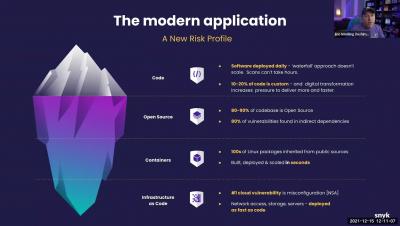
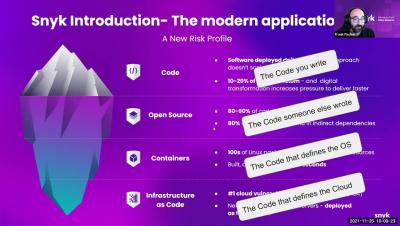
Emerging cloud-native technologies have shifted and expanded the scope of AppSec as we know it. Digital transformation and scale now hinges on developers’ ability to build and deploy rapidly – and doing so securely. Snyk’s developer security platform is designed to work like a developer tool – making it not only easy to find issues but to fix them quickly. In this recorded webinar, Jim Armstrong walks through a demo to show how developers can secure their proprietary code, open source libraries, container images, and infrastructure as code deployments.