Security | Threat Detection | Cyberattacks | DevSecOps | Compliance

Kubernetes Quick Hits: Use SecurityContext to run containers with a read-only filesystem

In this episode of our Kubernetes Quick Hits video series, Eric Smalling–Sr. In less than four minutes, you’ll learn how to use the readOnlyRootFilesystem control to keep your containers immutable and safe from modification by hackers and misbehaving code. Snyk helps software-driven businesses develop fast and stay secure. In addition to container security scans, Snyk can continuously monitor to find and fix vulnerabilities for npm, Maven, NuGet, RubyGems, PyPI and more.

Shifting security left while building a Cloud Native bank

Building a digital bank requires a unique combination of agility and speed while maintaining the highest level of security. Lunar, a digital challenger bank in the Nordics, has always had technology and agility as a differentiator. Lunar was built for the cloud, with Cloud Native principles, such as microservices, containers, and container orchestration amongst others. In this presentation Kasper will present some insights into the principles on which the Lunar infrastructure was built on, the continuous focus on security, and how application security is shifting left and becoming a developer concern.

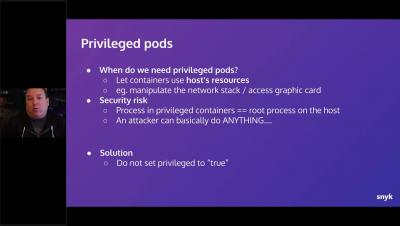
Kubernetes Quick Hits: SecurityContext and why not to run as root

In this, the first of our series of our Kubernetes Quick Hits videos, Eric Smalling–Sr. In less than five minutes, you understand why you need to *not* run your containers as root and what to do about it if you are. Snyk helps software-driven businesses develop fast and stay secure. In addition to container security scans, Snyk can continuously monitor to find and fix vulnerabilities for npm, Maven, NuGet, RubyGems, PyPI and more.

Secure Coding with IntelliJ

How can I do security in IntelliJ? Is there a security code scanner for IntelliJ? How can I test for security in Java? Is there a Snyk plug-in for IntelliJ? Make sure to subscribe so you don't miss new content! We know that IntelliJ IDEA is the most favorite and commonly used IDE in the Java landscape and a lot of developers practically live in their integrated development environment (IDE). A good IDE is like a swiss army knife; it is your go-to tool to do almost everything. Let’s see how we can integrate security and secure development into IntelliJ IDEA using this new Snyk plugin.

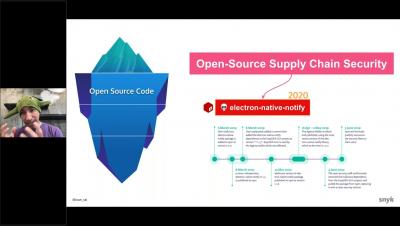
Are we forever doomed to software supply chain security?

The adoption of open-source software continues to grow and creates significant security concerns for everything from software supply chain attacks in language ecosystem registries to cloud-native application security concerns. In this session, we will explore how developers are targeted as a vehicle for malware distribution, how immensely we depend on open-source maintainers to release timely security fixes, and how the race to the cloud creates new security concerns for developers to cope with, as computing resources turn into infrastructure as code.

How To: Build and Maintain a DevSecOps Culture

DevSecOps is the process of integrating secure development best practices and methodologies into development and deployment processes. Reliant on the fast development and delivery of agile software, businesses cannot afford to miss a step when it comes to keeping pace with the competition. However, when the next security breach is a matter of ‘when’ not ‘if,’ organizations are also ill-fated if they fail to ensure that their DevOps processes are just as secure as they are speedy.