The list and severity of risks that can affect a transaction continue to grow, with cyber becoming an alarmingly difficult challenge for firms of all sizes. With tighter scrutiny around Regulations S-P and S-ID, a variety of disclosure obligations and new encrypted messaging apps, conducting proper cyber due diligence is imperative. However, will cyber diligence slow the deal? What are the implications for taking shortcuts?
Hosted by Kroll and Redscan cyber risk experts, this webinar addressed digital risk protection (DRP) and shared impactful use cases for today’s threat landscape. Often classified as “dark web monitoring,” DRP can be merged with cyber threat intelligence services to not only track threats, but take action against threats happening outside of your network.
46% of respondents cited lack of visibility over third parties as their leading source of bribery and corruption risk. Businesses need to have a tight grasp of their internal data, as well their external environment. Kroll Managing Director, Zoe Newman provides insights.
Despite bolstering internal defenses, 82% of respondents said illicit activity was having a significant impact on their organization. Which generates the question, why? Kroll Managing Director, Howard Cooper provides insights.
With the volume and sophistication of cyber threats growing, we asked 400 information security and 100 legal and compliance leaders from companies with over $500M in annual revenue how their organizations are planning to deal with incident response. Nearly all teams plan on automating more of their IR process, but nearly half face headwinds like lack of in-house expertise, lack of proper technology, and lack of bandwidth.
We surveyed 400 information security and 100 legal and compliance leaders from companies with over $500M in annual revenue and more than half reported increased cybersecurity budgets for next year and that their executive leadership is more aware of cyber threats. However, over 40% report internal obstacles with the adoption of security processes, lack of organization-wide support, and a "bare minimum" approach to security.
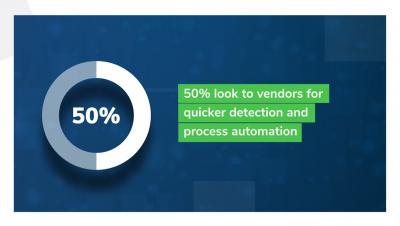
Internal security teams are overwhelmed by cyber threats and finding seasoned incident response professionals is now harder and more expensive. The State of Incident Response 2021 surveyed 400 information security and 100 legal and compliance leaders from companies with over $500M in annual revenue to learn how managed detection and response vendors are incorporated into their security programs. Over 76% of organizations are relying on a third-party vendor to augment in-house capabilities, and their biggest benefit is delivering faster containment, response, and more automation capabilities.
Chris Campbell, Chief Strategist at Kroll, Michael Kiely, President of U.S. Government Affairs at UPS and John Selib, Senior Vice President, Global Policy & Public Affairs at Pfizer, discuss the impact of regulation on the life sciences industry as well as emerging hot topics.