Security | Threat Detection | Cyberattacks | DevSecOps | Compliance

Challenge of Cybersecurity Insurance Amid Ransomware Attacks

The issue at hand is a direct result of the significant ransomware attacks that have forced organizations to pay out millions. In response, insurance companies have adopted a seemingly superficial, tick-box approach to cybersecurity assessments. Although they are attempting to enhance their due diligence, they fall short in truly evaluating security measures. Instead of thorough testing and on-site inspections, insurance companies rely on organizations to truthfully disclose their cybersecurity measures.

Understanding Insurance Risk

Insurance is essentially a sophisticated game of chance, where insurers evaluate the balance between the payouts they might need to make during the coverage period and the premiums they can charge. This delicate equilibrium hinges on risk assessment. When it comes to insuring against specific perils like fire, insurance companies send experts to scrutinize the safety measures in place. If your risk profile resembles a scene with candles, a furnace, and someone pouring gasoline, don't expect fire insurance because the risk here is simply too high.

Cyber Attack on Merck | Cyber Insurance

This case concerns a cyber attack on the pharmaceutical company, Merck, which, while not part of the national infrastructure, plays a crucial role in the healthcare ecosystem. The argument arises about whether they should be considered as critical as hospitals, as they supply medications and treatments, essentially acting as wizards in the healthcare industry.

Cyber Insurance - Does it Create More Problems than it Solves?

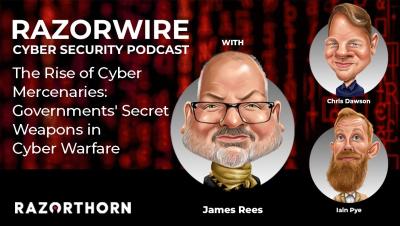
Welcome to Razorwire, where we and our expert guests tackle the issues and opportunities in the world of cybersecurity. In this episode, we explore the challenges and issues faced by the cyber liability insurance industry. This podcast looks into the complex challenges surrounding cyber insurance, an increasingly crucial topic for security leaders and organisations. Join your host James Rees and cybersecurity specialists Chris and Iain, as they engage in an enlightening discussion about the problems with cyber insurance.

James Rees on Self-Reflection and Burnout | Human Psychology

James Rees shares his personal experience with burnout, specifically during the early stages of running a business and facing the pressures of entrepreneurship, such as security incidents and team management. He describes a technique he uses where he steps back from his own emotional reactions to objectively analyze why he may be experiencing extreme anger, sleep problems, or overlooking simple things in his life. This method has proven effective in helping him understand and manage burnout.

Mastering Emotional Control: The Power of Deep Breathing Techniques

The idea here is that it's often better to ask others to do nothing initially, as it compels us to take action. This approach allows us to observe how people react. Afterward, it's crucial to review the situation, considering the emotional distance. To maintain composure, it's essential to calm the amygdala, which can be achieved through techniques like deep breathing. These techniques don't have to be related to yoga; even taking a moment to take deep breaths discreetly can help oxygenate the brain and reduce adrenaline. Once emotions are under control, you can then focus on assessing the facts of the situation.

Self-Awareness and Cognitive Fitness to Increase Performance

Bec McKeown discusses the importance of cognitive fitness, which involves agile thinking and cognitive techniques for decision-making. She emphasizes the significance of self-awareness, recognizing one's strengths, weaknesses, and development needs. In a team, this self-awareness helps individuals focus on their strengths and collaborate effectively, acknowledging that nobody excels in everything. The challenge lies in fostering interest in self-awareness among people.

Human Psychology on Immediate Threats | Bec McKeown

Bec McKeown explains how the brain prioritizes immediate threats by filtering out irrelevant information. She discusses how various situations, such as sudden realizations or encountering a ransomware attack, trigger physiological reactions like palpitations, sweating, and a sense of dread. Bec McKeown also mentions how during intense moments like a car accident, the brain's cognitive processes make time seem to slow down as it focuses solely on the threat, excluding all other details. This phenomenon is referred to as cognitive narrowing.

Fight, Flight, or Freeze | The Human Psychology of Security

Bec McKeown explains the intricate process of how this tiny brain structure, the amygdala, sends chemical signals down the spinal cord to the adrenal gland, resulting in the production of adrenaline. Explore the intriguing phenomenon of the freeze response and how it relates to the delicate balance between heightened adrenaline and reduced rationality. Learn about the evolutionary significance of this mechanism, which once helped our ancestors escape from saber-toothed tigers but now responds to various modern threats.

Cognitive Fitness: Cybersecurity Perspective on Complex VUCA Environments

Cybersecurity is a dynamic, ever-evolving space where traditional approaches often fall short. To thrive in this environment, one must cultivate the ability to think differently and harness cognitive skills to a higher degree than in many other fields. Bec McKeown emphasizes cognitive fitness through the lens of the cybersecurity realm's complex VUCA (Volatility, Uncertainty, Complexity, Ambiguity) environment.