Security | Threat Detection | Cyberattacks | DevSecOps | Compliance

Securing Agentic AI: Visibility and Protection for MCP Servers and A2A Traffic

AI agents aren’t just talking, they’re taking actions. They’re booking transactions, pulling sensitive data, and chaining tools together to get work done. As enterprises embrace these agents, protocols like the Model Context Protocol (MCP) and Agent-to-Agent (A2A) are enabling powerful new capabilities, but also creating invisible ecosystems of API-driven agent activity that traditional security tools can’t see or control.

You Can't Have AI Security Without API Security

For most leadership teams, the question is no longer if they’ll use AI, but how to turn it into measurable business value. Success hinges on the APIs that feed, govern, and scale AI initiatives — and whether your strategy is built for speed, security, and cost efficiency. From accelerating product development to delivering real-time customer experiences, the business case for AI is clear. But without the right API strategy, AI initiatives risk falling short — driving up costs, creating compliance gaps, and limiting ROI.

The CISO's Al Dilemma: How Security Leaders Are Making or Breaking Their Company's Future

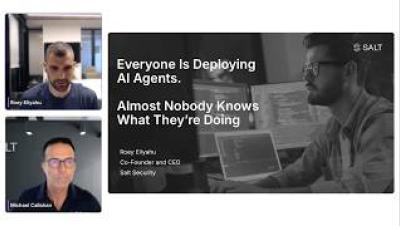
AI agents are transforming how leading companies operate, delivering 24/7 customer service, processing thousands of transactions, and driving unprecedented operational efficiency. 53% of organizations are already deploying AI agents for customer-facing tasks, with market leaders running hundreds or thousands of agents to gain a competitive advantage. These agents handle sensitive data, trigger transactions, and make autonomous decisions at machine speed. But the APIs that power them are becoming a vast, overlooked attack surface.

Solving Al Agent Sprawl: API Governance Across Multi Gateway Environments

As organizations accelerate adoption of AI agents, autonomous workflows powered by LLMs and MCP servers are rapidly proliferating across internal systems, partner networks, cloud environments, and API gateways. The result? A sprawling, often invisible attack surface: shadow APIs, duplicate endpoints, context drift, unmanaged agent access, inconsistent policies, and risk of data exposure or compliance failures.