Security | Threat Detection | Cyberattacks | DevSecOps | Compliance

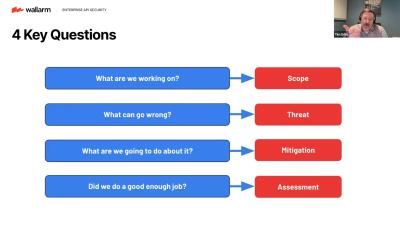
CISO Workshop on API Threat Modeling: How to Use STRIDE to Predict, Prevent, and Protect

Threat modeling is a critical function for effective cybersecurity and threat models must adapt to emerging threats. As API deployments grow across organizations, cybersecurity teams need to extend their threat modeling to include the API attack surface. In this webinar, we'll examine threat modeling best practices for APIs, focusing on the STRIDE methodology. Attendees will learn.

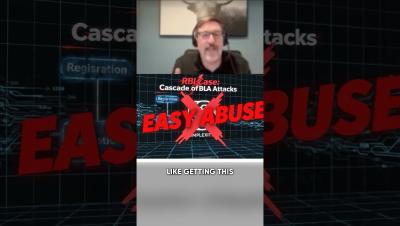
The Business Logic Paradox: Hackers Are Your Best Architects #businesslogic #cybersecurity #api

Here is the truth: To exploit Business Logic Abuse, hackers must understand your application flow holistically. Your individual developers focus on clean code within their one block. The attacker studies the entire blueprint and finds the gaps and missing connections between those blocks. They are committed-spending months on reconnaissance to know your product better than your own team. You must adopt the attacker's mindset in your design stages!

The Most Dangerous Blind Spot in SaaS Architecture #saas #saassecurity #cloudsecurity #apisecurity

When data flows between two critical SaaS tools (like Salesforce and a CRM chatbot), you have zero visibility into that traffic. This leaves a gaping hole for attackers to exploit Business Logic Abuse. Since you can't see the traffic, you cannot monitor the attack. The Solution? Rigorous Vendor Management. Control Your Own Keys! The responsibility to protect your sensitive data is always yours, even in the cloud.

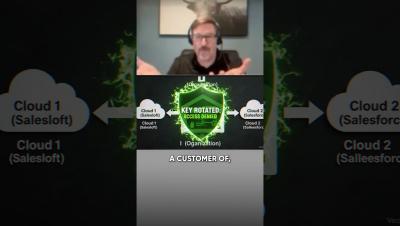
Your SaaS Integrations are Leaking Sensitive Data - Salesloft /Salesforce incident #aws #apisecurity

The Salesloft/Salesforce incident revealed the danger of BLA 5: Artifact Lifetime Exploitation. The flaw is simple: the application fails to expire tokens and sessions properly. Stolen OAuth tokens that should have been short-lived were used to steal AWS keys, Snowflake tokens, and passwords. Key Takeaway: If an artifact is meant to be short-lived (a token, a session, a temporary file), it must be retired immediately upon expiration. Rotate your keys aggressively!

Hackers Skipped the Payment Step: BLA 4 is Pure Logic Evasion #transitionvalidation #businesslogic

Missing Transition Validation (BLA 4) is a subtle but devastating threat. It exploits the sequence of steps in your application's workflow. The flaw? Your application fails to check that Step 2 (Payment) occurred before allowing access to Step 3 (Confirmation). The attacker simply draws a line straight to the goal! This attack is: Difficult to Detect: It uses valid requests in an invalid sequence. Tightly Coupled: It's unique to your application's specific logic. You need deep, sequence-aware runtime protection.

The Missing Link in OWASP is Found: Business Logic Abuse#owasp #owasptop10 #businesslogic

For years, security lists focused on technology (Cloud , Mobile , Serverless ). We desperately needed a list that focused on the core problem: flawed application logic, regardless of the stack. The OWASP Top 10 Business Logic Abuse (BLA) list fills that critical, architectural gap. Why? Because exploitation often happens between technologies, not within them. We must be able to categorize and talk about these intricate logic threats in a technology-agnostic way.

Stateless vs. Stateful: The Difference in Cyber Attacks #StatefulAttack #businesslogic #apisecurity

The Hacker is Having a Conversation with Your API. There are two kinds of attacks you MUST understand: Stateless (Brute Force): One-and-done, instant gratification. Think SQL Injection. Stateful (Sophisticated): A persistent conversation over time. This is the signature of Business Logic Abuse. Why does this matter? Stateful attacks are executed by sophisticated threat actors who have done their due diligence on your architecture. You must evolve your defenses to monitor the entire session, not just single requests!

Hacked Architecture, Not Code: What is a Business Logic Attack? #businesslogic #cybersecurity

Why do hackers ignore your firewalls and clean code? Because they exploit your business logic and application architecture. A Business Logic Attack (BLA) is a sophisticated manipulation that uses your own system's design against you. Learn the key difference between code flaws and architectural exploits.

API Gateway vs. API Security #apisecurity #cybersecurity #architecture #devsecops

Your API Gateway Is Not an API Security Solution Confusing API management with API security is a costly and dangerous mistake. An API Gateway is a traffic controller, but it has critical blind spots: It authenticates users but doesn't analyze their behavior for malicious intent. It routes traffic but doesn't inspect payloads for complex attacks. It manages access but can't detect business logic abuse.

The Secret Backdoor in Your Firewall... How Attackers Get In WITHOUT Hacking!#cybersecurity#InfoSec

Your WAF is Providing a False Sense of Security Improper network configuration can completely nullify the effectiveness of your Web Application Firewall. If attackers can discover your origin server's direct IP address: They can bypass your expensive security controls entirely. Your "internal" services become externally exposed. You have a massive, unknown gap in your defenses. This animation is a clear example of why security doesn't end with buying a tool. Proper integration and a zero-trust mindset are non-negotiable.