Security | Threat Detection | Cyberattacks | DevSecOps | Compliance

CI/CD Security Controls for Mobile App Pipelines: The DevOps Manager's Toolkit

You run the pipeline. You own the releases. And somewhere between the security team's findings and the development team's sprint, you're the one getting asked to explain why nothing is getting fixed. That's not a security problem. It's a coordination problem, and it's structural. According to the DuploCloud AI + DevOps Report, Sep 2025, The pipeline is under more pressure than it's ever been. The attack surface is wider than it's ever been.

Are eSIM Safe for Online Banking While Traveling?

When you are abroad, online banking becomes part of the trip. You check a card charge after dinner, move money for a hotel deposit, or approve a login while standing under a bright arrivals board. With eSIM like Jetpac you can get data without swapping a physical SIM, which helps you stay connected in those small, practical moments.

Why Your Security Investment Isn't Reducing Risk (+What Actually Does)

Security budgets have never been higher. The average enterprise now runs 50 security tools, and most teams added more last year than the year before. And yet, alert fatigue is at the breaking point. Coverage gaps in mobile and API environments continue to widen. The exploitability problem at the center of most AppSec programs remains unsolved. Breaches keep happening. Risk scores don't move.

Aurora Mobile Threat Defense - Addressing Your HighestTrusted, Least Protected Endpoints

Mobile devices are becoming the highest‑trusted endpoints that are the least protected. They approve logins. They hold authentication apps. They carry email, collaboration, and business applications. And they travel everywhere your workforce travels: across corporate networks, home Wi‑Fi, airports, hotels, and cafés. That combination (high trust plus constant movement) is why mobile has become such a reliable entry point for credential theft and account takeover.

Enterprise Mobility Management: The Complete Guide to Securing Your Mobile Workforce

During and after the COVID-19 pandemic, workplaces are no longer confined to just office cubicles. With organizations adopting a Bring Your Own Device (BYOD) policy and employees using mobile devices for work, managing the security and productivity of a mobile workforce has become a critical business priority.

What MDM can't protect on developer machines (and what to do about it)

Mobile Device Management (MDM) is a type of software used by organizations to secure, manage, and monitor their employees' mobile devices. Tools like Jamf, Kandji, and Microsoft Intune give IT teams visibility and control over every sanctioned application across the fleet. For compliance frameworks like SOC 2 or ISO 27001, MDM is often a core component of how you demonstrate device control and ensure data security. If your MDM is deployed, congratulations, you've solved 2012's BYOD security challenge.

Invisible Cross-Tracking: How Mobile Apps Share Your Data and How to Stop It

Tracking user activity across apps on mobile devices is crucial, as data no longer flows from a single source on phones. For example, in the span of an hour, a user might open Instagram, Gmail, a shopping app, a weather app, and a free game, while various advertising tools quietly analyze network signals, device behavior, location data, and app usage patterns. A VPN won't remove every unique identifier in these apps, but it does make it harder to connect one link in this tracking chain: the digital network footprint.

Why 'Secure' Mobile Apps Still Get Hacked | Post-Deployment Security

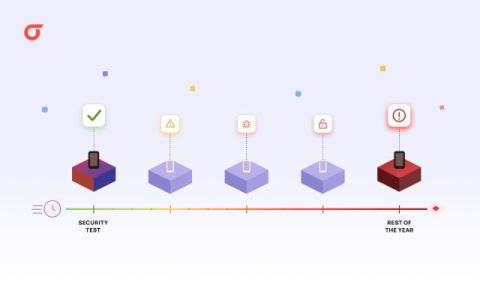
Your app passed testing. CI/CD ran clean. The App Store approved it. Your security team signed off. Six weeks later, attackers are reverse-engineering the binary on rooted devices, injecting JavaScript into your runtime, and probing API endpoints your scanner never modeled. Nothing in the code changed. The threat environment did. This is the central problem of modern mobile application security, and it doesn't get fixed by adding more pre-release scanners.

How Arctic Wolf Aurora Mobile Threat Defense Protects the Mobile Attack Surface

How Arctic Wolf Aurora Mobile Threat Defense secures the full mobile attack surface—devices, apps, networks, phishing, and privacy—in one unified platform. This demo highlights real‑time visibility, actionable insights, and automated response to reduce mobile risk.

How Parents Can Detect Smishing Attacks on Their Child's Smartphone Early

Teenagers get dozens of texts every day in this digital age. Some of those come from delivery applications, gaming platforms, schools or friends. However fraudsters are increasingly employing risky smishing attacks to fool kids into clicking on phony links, disclosing passwords or divulging personal information by hiding these typical messages.