Security | Threat Detection | Cyberattacks | DevSecOps | Compliance

Cybersecurity in Telecom: How Smart Expense Management Helps Mitigate Risks

Telecom cyber attacks have evolved, leading to data exposure, unauthorized access, and financial loss. Poor security controls and unmanaged telecom expenditure typically leave firms vulnerable to fraud and abuse. Expense management is essential for detecting anomalies that can be used to identify security threats. Real-time telecom spending monitoring helps firms detect suspicious behavior, prevent unauthorized use, and enhance overall security. Proactive monitoring helps with both financial control and network security.


Is Building Customer Trust in Cyber Sales Really That Simple?

Gaining customer trust in cyber sales might seem like a tall order. After all, you're asking people to trust you with their money-or even more tricky, their data-on an often faceless digital platform. But is it really that hard to build trust? Maybe not. With the right approach, some genuine effort, and the use of smart tools, creating strong customer relationships in cyber sales might actually be simpler than you think.

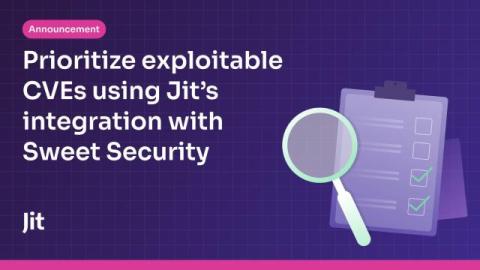
Cut Through the Noise: Prioritizing Exploitable CVEs with Jit + Sweet Security

Open source security scanners generate overwhelming volumes of potential security issues that need to be manually investigated to determine their true risk. Open source dependencies introduce a constant stream of CVEs, but not every vulnerability is actually exploitable. Without runtime context, teams waste time chasing issues that pose little to no real risk—slowing down development and diverting focus from true risks.

Understanding the Zero Trust Security Framework: Core Principles and Benefits for CISOs

The Zero Trust Security Framework is a fundamental approach to digital security. It assumes that every user and device is untrusted, requiring continuous authentication. This model helps to protect against the growing number of cyber threats. In this article, we discuss its principles, benefits, and real-world applications.

Securing Payment Pages: A Complete Guide to PCI DSS 4.0.1 Compliance for SAQ A-EP Merchants

PCI DSS for e-commerce is essential for SAQ A-EP merchants who manage complex payment environments, including custom payment pages, interactive checkout flows, and third-party payment integrations. These merchants—such as SaaS platforms, online retailers, travel booking sites, and digital service providers—must comply with stringent security requirements to protect sensitive payment data.