Security | Threat Detection | Cyberattacks | DevSecOps | Compliance

HTTP Response Splitting Attack

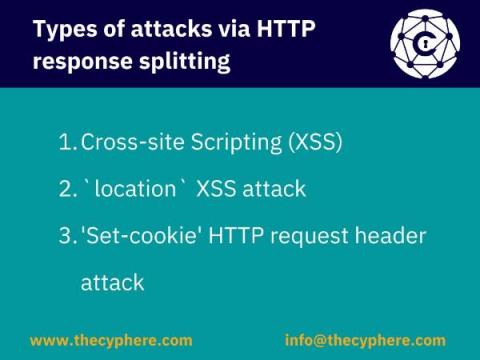
HTTP Response Splitting entails a kind of attack in which an attacker can fiddle with response headers that will be interpreted by the client. The attack is simple: an attacker passes malicious data to a vulnerable application, and the application includes the malicious data in the single HTTP response, thus leading a way to set arbitrary headers and embedding data according to the whims and wishes of the attacker.


Observability Pipelines & AIOps can make IT Smarter

Enterprise data systems are like busy family households. You see a constant flow of activity to varying degrees from room to room. This activity includes people wandering, opening and closing doors. And then there are other streams constantly flowing through the household- electricity, water, Wi-Fi networks and more. In modern enterprises, the data deluge is a critical issue. While we take the complexity for granted in a household, such is not allowed in a connected enterprise.

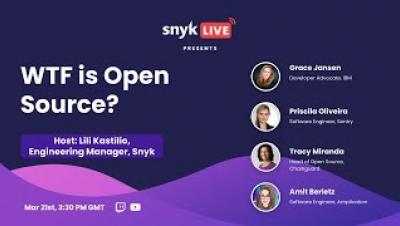
WTF is Open Source

Are you looking to join an existing open source project, but don’t know where to start? Interested in finding out more about open source software in general? Looking to start a personal project but don’t know what to base it on? If the answer is yes, this event could be for you. We will be hosting a panel discussion with amazing leaders within the OS space. They will share everything from how they got involved, what they are working on at the moment as well as share any tips and tricks they learnt along the way.

Protestware is trending in open source: 4 different types and their impact

A few days ago, Snyk reported on a new type of threat vector in the open source community: protestware. The advisory was about a transitive vulnerability — peacenotwar — in node-ipc that impacted the supply chain of a great deal of developers. Snyk uses various intel threat feeds and algorithms to monitor chatter on potential threats to open source, and we believe this may just be the tip of a protestware iceberg.

Cross-Account and Cross-Cluster Restore of Kubernetes Demonstrated on Amazon EKS

Cross-Account and Cross-Cluster Restore of Kubernetes Applications Using CloudCasa on Amazon EKS. Users can now browse and map the available storage classes in the source and destination cluster across different AWS accounts and different Cloud Providers such as AKS, GKE, DO, IBM Cloud etc.

SOARs vs. No-Code Security Automation: The Case for Both

Just a few years ago, security orchestration, automation and response (SOAR) was the new buzzword associated with security modernization. Today, however, SOAR platforms are increasingly assuming a legacy look and feel. Although SOARs still have their place in a modern SecOps strategy, the key to driving SecOps forward today is no-code security automation.