Security | Threat Detection | Cyberattacks | DevSecOps | Compliance

ICS Environments and Patch Management: What to Do If You Can't Patch

The evolution of the cyber threat landscape highlights the emerging need for organizations to strengthen their ability to identify, analyze, and evaluate cyber risks before they evolve into security incidents. Although the terms “patch management” and “vulnerability management” are used as if they are interchangeable, this is not the case. Most are confused because applying patches is one of the many tools that’s available in our arsenal for mitigating cyber risks.


Securing Office 365 against the latest threats

The world is currently gripped by the spread of Covid-19, more commonly referred to as coronavirus, and unsurprisingly, cybercriminals are making the most of the situation and public uncertainty through phishing scams. There are many different examples of Covid-19 phishing scams in active circulation. Some purport to share the latest guidance, others encourage people to apply for a tax rebate, and yet more ask for donations towards medical efforts. Some even claim to provide a magical cure.

How SIEM is evolving in 2020

The evolution of Security Information and Event Management (SIEM) is deeply intertwined with cloud computing, both in terms of technological breakthroughs the cloud provided and from its inherent security challenges. With the rise of cloud computing, we no longer rely on long-lived resources. An ephemeral infrastructure obscures the identity of the components and, even if you do have the visibility it doesn’t necessarily mean you can comprehend the meaning behind the components.

Exploits, vulnerabilities and threat adaptation

Security, whether focused on physical, cyber, operational, or other domains, is an interesting topic that lends itself to considerable debate among practitioners. There are, however, basic concepts and underpinnings that pervade general security theory. One of the most important, yet often misunderstood concepts are those inextricably entwined concepts of vulnerabilities and exploits. These basic underpinnings are critical in all security domains.

Sysdig extends security control with VMware Tanzu Service Mesh

Sysdig is working with VMware to deliver enhanced microservice and cloud security. Leveraging the container runtime security capabilities of Sysdig Secure along with the operations and security policies of VMware Tanzu Service Mesh, built on VMware NSX, customers will be better able to accelerate Kubernetes and cloud adoption, as well as application modernization.

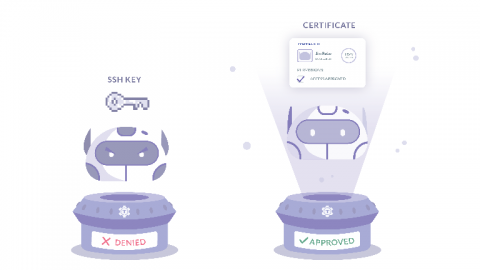
Applying the Principles of Zero Trust to SSH

The Zero Trust approach to security is based not on where you are, but who you are. This model shifts the focus from network and perimeter-based security to identity-based access. In simple terms, this means: Zero Trust security provides a powerful approach to keeping an organization’s resources secure and usage auditable.

What is Zero Trust? A Model for More Effective Security

Zero Trust is an information security model that does not implicitly trust anything inside or outside its network perimeter. Instead, it requires authentication or verification before granting access to sensitive data or protected resources. Zero Trust was coined by John Kindervag at Forrester Research in 2009. Zero Trust security provides visibility and security controls needed to secure, manage, and monitor every device, user, app, and network.

How Organizations Can Achieve Security Availability

We have seen great strides in improving security tooling and processes over the past ten years. Via constantly maturing security models, security teams have become increasingly dependent upon an ever-more complex toolchain of products and services. But what happens when these systems fail. How much effort are we putting into planning and maintaining our security solutions to ensure they’re available when issues occur?