Security | Threat Detection | Cyberattacks | DevSecOps | Compliance

Chinese APT Groups Use Ransomware for Espionage and Diversion

Cyberespionage groups are increasingly using ransomware not just for financial gain but also as a tactic to complicate attack attribution, distract defenders, or serve as a secondary objective to data theft. A recent report highlights the activities of ChamelGang, a suspected Chinese advanced persistent threat (APT) group, which uses the CatB ransomware strain to target high-profile organizations globally.
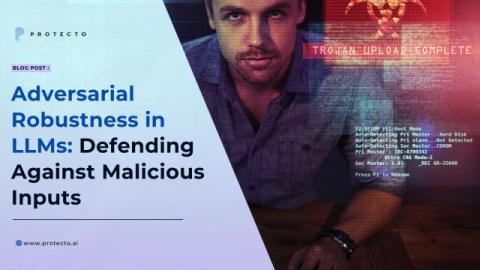
Adversarial Robustness in LLMs: Defending Against Malicious Inputs

Large Language Models (LLMs) are advanced artificial intelligence systems that understand and generate human language. These models, such as GPT-4, are built on deep learning architectures and trained on vast datasets, enabling them to perform various tasks, including text completion, translation, summarization, and more. Their ability to generate coherent and contextually relevant text has made them invaluable in the healthcare, finance, customer service, and entertainment industries.

Data Anonymization Techniques for Secure LLM Utilization

Data anonymization is transforming data to prevent the identification of individuals while conserving the data's utility. This technique is crucial for protecting sensitive information, securing compliance with privacy regulations, and upholding user trust. In the context of LLMs, anonymization is essential to protect the vast amounts of personal data these models often process, ensuring they can be utilized without compromising individual privacy.

How to Enhance Ubuntu Security: Advanced Features and Techniques

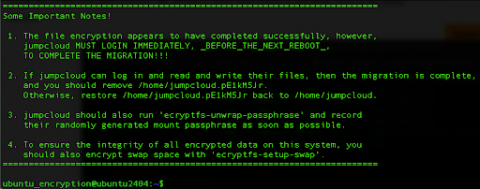
Jump to Tutorial Ubuntu, a popular Linux distribution, is known for its robust security features. There is always space for improvement once you install a fresh operating system, so in this article, we will guide you through the advanced techniques and features to enhance the security of the latest Ubuntu 24.04 version. There are multiple layers of security that Ubuntu offers out of the box, but we can implement additional steps that can further protect your system from threats.

Third-Party Risk Management Dashboard: How to Design One

In today's interconnected business landscape, Third-Party Risk Management (TPRM), sometimes called vendor risk management (VRM), is a critical cybersecurity strategy for organizations aiming to safeguard their operations and reputation. With most companies increasing their reliance on external vendors and service providers, managing and mitigating risks associated with these third-party relationships is paramount.

SBOM Attestation by 3PAOs: Everything You Need to Know

In the past, we’ve written a lot about FedRAMP certification and the way the Ignyte platform can help you with record-keeping and the overall process. We’ve largely glossed over the role that the third-party assessment organization plays, hand-waving it as a relationship you build between your chosen 3PAO and your own organization. As a certified 3PAO, however, we do have a unique insight into this process.

Risks for Polyfill.io Users

Earlier this year, a Chinese company named Funnull acquired the polyfillio. Due to this acquisition, this code was used to redirect mobile visitors to scam sites. Over 100,000 websites using the previously popular Polyfill JS open-source project are vulnerable to attacks that redirect traffic to sports betting and pornography sites.

How CPG 235 is Shaping Data Security Standards in Finance

In 2013, the Australian Prudential Regulation Authority (APRA) introduced Prudential Practice Guide CPG 235, a comprehensive framework designed to enhance data risk management across the finance sector. This guide provides financial institutions with principles and best practices to safeguard data integrity, confidentiality, and availability. This blog explores CPG 235, its key components, compliance requirements, and how implementing the framework can enhance data security standards at your organization.

Boost Your Cybersecurity with DevSecOps

As cyber threats increase in complexity and frequency, traditional security methods often fall short of safeguarding sensitive data and vital systems. DevSecOps offers a groundbreaking approach by incorporating security practices into all stages of the software development lifecycle (SDLC). By uniting development, security, and operations, DevSecOps ensures that security is a collective responsibility, promoting a culture of collaboration and ongoing enhancement.