Frontier AI is shrinking the window between vulnerability discovery and exploitation. Find exploitable risk before adversaries weaponize it. Subscribe and stay updated!
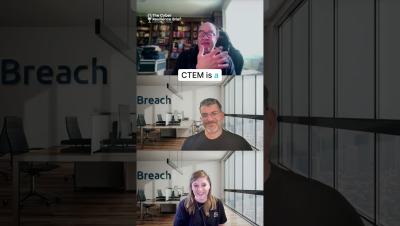
(CTEM) Continuous Threat Exposure Management—isn't just another framework. It's a philosophy for finally connecting the parts of your security program that aren't talking to each other. SafeBreach Helm makes it actionable for any organization, no matter where you're starting from.
Are you still stuck on the vulnerability hamster wheel? In this episode of the Cyber Resilience Brief, host Tova Dvorin is joined by SafeBreach VP of Product Koby Bar and offensive security expert Adrian Culley to unpack a major shift in how enterprises approach proactive security — and to announce the launch of SafeBreach Helm, the AI validation layer built for Continuous Threat Exposure Management (CTEM).
Mend.io, formerly known as Whitesource, has over a decade of experience helping global organizations build world-class AppSec programs that reduce risk and accelerate development -– using tools built into the technologies that software and security teams already love. Our automated technology protects organizations from supply chain and malicious package attacks, vulnerabilities in open source and custom code, and open-source license risks.
Singapore’s financial sector faces its most demanding regulatory environment yet in 2026. AI-powered cyberattacks, cloud-native banking infrastructure, and decentralised finance have pushed the Monetary Authority of Singapore (MAS) to sharpen its supervisory focus — and its expectations of every regulated institution. If you are a CISO, CTO, Head of Compliance, or technology risk officer at a Singapore financial institution, this guide answers the question your regulators are already asking.
Threat actors are getting better at hiding in plain sight through using virtual environments to evade detection and deliver ransomware. New research from Sophos X-Ops reveals an increase in the abuse of QEMU, an open-source emulator, to conceal malicious activity inside virtual machines. While this technique isn’t new, its use for defense evasion is accelerating, making visibility and detection even more challenging for defenders.
MSPs today face growing security demands alongside increasing operational complexity. Disconnected tools and manual processes create noise, slow response times, and limit scalability. The solution? Automation and integration. By connecting security platforms with PSA and RMM tools, MSPs can streamline workflows, reduce alert fatigue, and improve service delivery, turning reactive processes into proactive, efficient operations.
Anthropic built a powerful AI model and then kept it on a short leash. The important part is not that a model found bugs, which has been coming for a while. What’s worth acknowledging is that Anthropic looked at what Mythos could do and decided broad release was a bad idea. Attackers do not need a perfect autonomous system. They need leverage.
Securonix Threat Research analyzed a stealthy Python-based backdoor framework, dubbed Deep#Door, which uses an obfuscated batch loader to deploy a persistent surveillance and credential-stealing implant on Windows systems.
In February 2026, researchers uncovered something that should give every security leader pause. A malware operation called SmartLoader, previously known for targeting consumers who downloaded pirated software, had completely pivoted its infrastructure. SmartLoaders new target was developers, and its new entry point was a protocol most security teams had never heard of. The payload delivered to victims: every saved browser password, every cloud session token, every SSH key on the machine.