Security | Threat Detection | Cyberattacks | DevSecOps | Compliance

What You Need to Know about the Community Health Center Data Breach

Community Health Center (CHC) is a non-profit founded in 1972 and headquartered in Middletown, Connecticut. It offers a broad range of services, including dentistry, primary care, urgent care, specialty medical services, and behavioral health. CHC provides healthcare services to residents in various parts of the state, including Bristol, Hartford, Waterbury, Middletown, Stamford, and New Britain.
Will Proposed Rules for Health Industry Actually Strengthen Cybersecurity?

If you’re a US citizen, you’re likely numb to the endless letters informing you of your information being stolen yet again. For most of us, this is an annoyance and an inconvenience. But if you’re a patient in a hospital during an attack, it would be disconcerting to know that studies indicate medical errors increase by 30% when clinical applications are offline, and there’s a “small but significant” increase in patient mortality.

Ransomware in the Global Healthcare Industry

Following the World Health Organisation (WHO) hosting a webinar to discuss the critical importance of cybersecurity in the healthcare sector, it is clear the severity of the situation the industry is facing is coming to the fore. Healthcare organizations are increasingly relying on digital systems to facilitate their daily workflow, but the prevalence of outdated legacy technology in the sector is rendering it vulnerable to cyberattacks with severe consequences.

How the Proposed HISAA Law Could Reshape Cybersecurity Compliance

It’s been a tough year for the healthcare sector. Throughout 2024, cybercriminals have unleashed a barrage of attacks on a vast number of healthcare organizations - with disconcerting levels of success. FBI research revealed that healthcare is now the US’s most targeted industry.

A Comprehensive Guide to Healthcare Cybersecurity

The healthcare industry faces a unique and urgent challenge in the ever-evolving world of cyber threats. As businesses across sectors fortify their digital defenses, healthcare stands out as a critical target due to its reliance on interconnected devices and vast repositories of sensitive patient data.

84% of Healthcare Organizations Sustained Cyberattacks Last Year

A new survey by cybersecurity vendor Netwrix found that 84% of healthcare organizations spotted a cyberattack in the past twelve months, with phishing attacks accounting for 63% of these incidents. “Phishing was the most common type of incident experienced on premises, similar to other industries,” Netwrix says. “Account compromise topped the list for cloud attacks: 74% of healthcare organizations that spotted a cyberattack reported user or admin account compromise.”

Securing Sensitive Data in Healthcare: Why Privacy and Protection Must Be a Top Priority

Protegrity specializes in protecting sensitive data, a focus we’ve maintained for around 20 years. Our customer base includes many large enterprises, particularly in the healthcare and financial sectors, spanning across the globe. Our clients include some of the most renowned companies worldwide.

Cyber Essentials NHS and Healthcare Organisations

Cyber Essentials scheme is a UK government-backed initiative designed to help organisations, large or small, shield themselves from common cyber threats. It outlines a straightforward set of technical security controls that, when appropriately implemented, can reduce an organisation’s attack surface. This is particularly vital for NHS and healthcare organisations. They handle NHS data that needs robust protection.

Best Practices for De-Identifying PHI: A Comprehensive Guide

In the hands of the right individuals, healthcare data can be of immense value. Place it in the wrong hands, however, and it can also be a significant privacy risk. PHI or Protected Health Information can contain many details that directly identify a person. These can be names, addresses, financial data, medical histories, etc.; personal identifiers that can point to specific people.

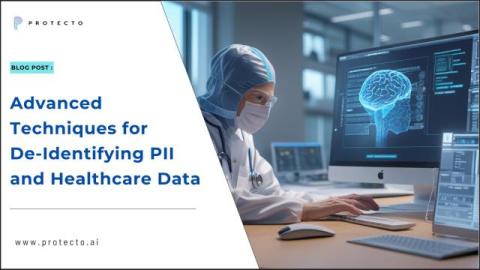
Advanced Techniques for De-Identifying PII and Healthcare Data

Protecting sensitive information is critical in healthcare. Personally Identifiable Information (PII) and Protected Health Information (PHI) form the foundation of healthcare operations. However, these data types come with significant privacy risks. Advanced de-identification techniques provide a reliable way to secure this data while complying with regulations like HIPAA.