“You’ve inherited a fortune. To transfer the money, I need your bank account credentials.” If you have ever stumbled across something like this, you need to continue reading. According to Verizon’s 2022 Data Breach Investigations Report, 25% of all data breaches consistently involve phishing. How does this happen? The fraudsters who are involved in phishing are some of the best content writers.
Humans are considered the weakest link in cybersecurity. No matter how much a company invests in firewalls, antivirus, and other security software to detect, deter, and prevent attacks humans will always be the main vectors for compromise. If no adequate user-security training is provided within the organization, they will always be at risk. Phishing is one of the oldest cyber-attacks yet one of the most used by attackers due to its effectiveness and low cost.
Email allows people to instantly connect with others across the world and share almost any information they want. They frequently contain text, document attachments and multimedia such as images and videos. With all of this information able to be shared, chances are you’ve sent a good amount of sensitive information to other people over the years – and that makes your email account a target for cybercriminals.
Netskope Threat Labs recently discovered a phishing campaign that is abusing Adobe Acrobat to host a Microsoft Office phishing page. While abusing free cloud services to host malicious content is a popular attack technique, this is the first time we have seen Adobe Acrobat used to deliver malicious content. The attack starts with a phishing email that lures the user into opening a PDF file that redirects them to an Adobe Acrobat URL.
Phishing is one of the most common online security threats. A phishing website tries to mimic a legitimate page in order to obtain sensitive data such as usernames, passwords, or financial and health-related information from potential victims. Machine learning (ML) algorithms have been used to detect phishing websites, as a complementary approach to signature matching and heuristics.
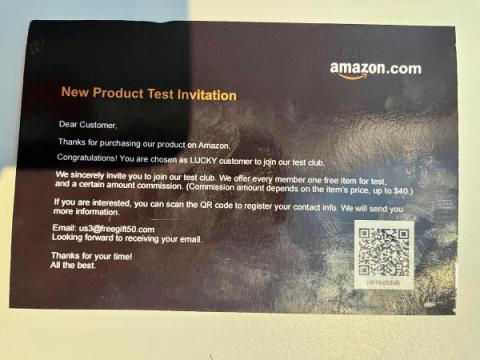
Do you know what “fangxiao” means in simplified Chinese? Before you Google it, let me tell you that it stands for “imitate” and this is exactly what Fangxiao phishing campaign actors try to do – imitate and exploit the reputation of international, trusted brands by promising financial or physical incentives to trick victims into further spreading the campaign through WhatsApp.
Scenario-Based Security Awareness Training Teaches Users to Make Better Decisions – Proofpoint Essentials Security Awareness Training. What is GDPR Awareness Training? Since 2018, companies and organisations have had to comply with The General Data Protection Regulation (GDPR), a European data privacy regulation and EU law that was made to give individuals more control over how their data is collected, used, and safeguarded online. Failure to comply with this EU law can result in hefty fines.
Phishing hackers have struck again; this time, US retail brand, Bed, Bath & Beyond has fallen prey to the attack. Only a few details are available to the broader public; however, there is much more than meets the eye.
A recent campaign, unearthed by researchers at INKY, is the latest example of exploitation of a legitimate cloud service. The campaign impersonates the U.S. Small Business Administration (SBA), targeting small businesses that are unaware of the fact that the SBA recently stopped accepting applications for COVID-19 relief loans or grants. The element that makes this campaign stand out from the others is the exploitation of a well-known and familiar cloud service to host the phishing page: Google Forms.