Netskope Threat Labs is tracking a 17x increase in traffic to malicious web pages hosted on DigitalOcean in the last six months. This increase is attributed to new campaigns of a known tech support scam that mimics Windows Defender and tries to deceive users into believing that their computer is infected.
Overall, while API email security services can provide a valuable layer of protection against email-based threats, they are not foolproof and can have limitations and weaknesses. It is important to consider these weaknesses when selecting and configuring an API email security service.
Spam email is a type of email that is sent in bulk for commercial advertising or phishing. Email scams are also a spam email, where scammers try to trick you into revealing personal information or giving them money. It can be easy to identify spam and phishing scam emails if you know what to look for in fake emails.
Business email compromise (BEC) is a dangerous type of email spoofing that targets businesses, aiming to damage them in some way. Overall, BEC “is one of the most financially damaging online crimes,” according to a joint Cybersecurity Advisory by the Federal Bureau of Investigation (FBI), the Food and Drug Administration Office of Criminal Investigations (FDA OCI), and the US Department of Agriculture (USDA).
Willie Sutton, the criminal who became legendary for stealing from banks during a forty year career, was once asked, "Why do you keep robbing banks?" His answer? "Because that's where the money is." However, today there's a better target for robbers today than banks, which are typically well-defended against theft... Cryptocurrency wallets.
Stolen employee login credentials are one of the most effective ways for bad actors to infiltrate your organization’s infrastructure. Once they have the login information of one of your accounts in hand, it becomes much easier for them to bypass security measures and gain access to your sensitive data. So how do attackers get those login credentials? The answer in many cases is mobile phishing.
The widespread adoption of cloud transformation and hybrid work are increasing the attack surface while attacks get increasingly sophisticated. Attacks targeting cloud infrastructure and email-borne threats have soared to unprecedented levels, making it critical for organizations to protect sensitive data regardless of where it may be stored.
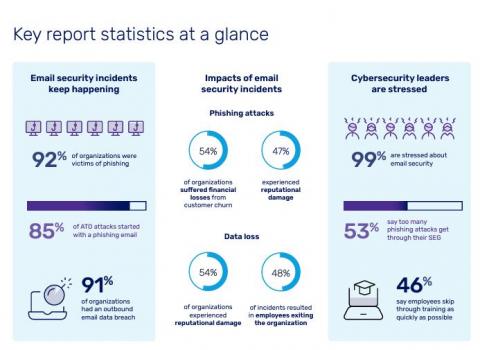
Phishing is a big problem that’s getting even bigger as cybercriminals find new ways to hook employees. With threats coming from every direction – emails on company computers, text and voice messages on mobile devices and in personal communications channels, malicious typosquatting sites, phony marketing QR codes and more – it’s only a matter of time before someone trips up and opens or clicks on something they shouldn’t.