Security | Threat Detection | Cyberattacks | DevSecOps | Compliance

How and when to use Docker labels / OCI container annotations

Most container images are built using Dockerfiles which contain combinations of instructions like FROM, RUN, COPY, ENTRYPOINT, etc. to build the layers of an OCI-compliant image. One instruction that is used surprisingly rarely, though, is LABEL. In this post, we’ll dig into labels (“annotations” in the OCI Image Specification) what they are, some standardized uses as well as some practices you can use to enhance your container security posture.

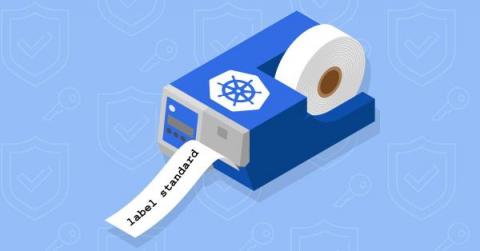
Label standard and best practices for Kubernetes security

In this blog post, I will be talking about label standard and best practices for Kubernetes security. This is a common area where I see organizations struggle to define the set of labels required to meet their security requirements. My advice is to always start with a hierarchical security design that is capable of achieving your enterprise security and compliance requirements, then define your label standard in alignment with your design.

Cloud Infrastructure Entitlements Management (CIEM) with Sysdig Secure

Discover what CIEM Security is and how easy it is to implement with Sysdig Secure for cloud. Over-permissioned accounts and roles is the most common cloud service misconfiguration security problem. Implementing least privilege is a crucial best practice to avoid or mitigate risks of data breaches and contain privilege escalation and lateral movement.

Remediating Excessive IAM permissions in less than 2 minutes with Sysdig Secure

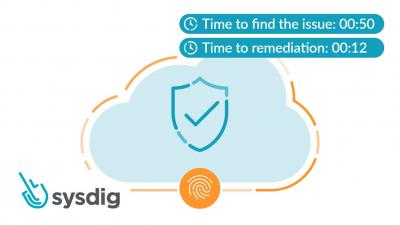
Over-privileged users in the cloud are everywhere!! Security teams are struggling with getting visibility into who should have access to what or how to enforce least privilege access. How do you manage excessive permissions in the cloud? Let's dig in! Sysdig reduces times to secure identities on the cloud to as little as two minutes.

Threat news: Tsunami malware mutated. Now targeting Jenkins and Weblogic services

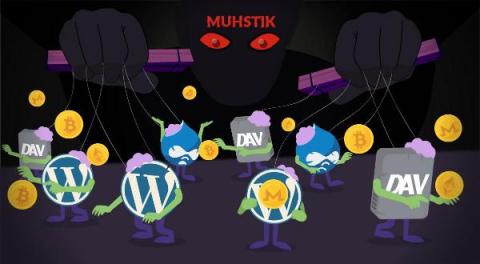
The Tsunami malware is back! Although it appeared for the first time several years ago, the Sysdig Research Team has just discovered a new sample of Tsunami malware targeting Jenkins and Weblogic services deployed in Kubernetes clusters. The Tsunami malware is a backdoor that gives the attackers full control over the infected systems. Indeed the targeted machines, once infected, communicate with an IRC server waiting for new commands to be executed.

Securing Google Cloud Platform with Sysdig

Together with Google Cloud, Sysdig reduces your cloud security risk. So you can confidently run your workloads on Google Cloud. Get started in minutes with Sysdig SaaS, and simplify security, compliance, and monitoring. Accelerate your growth with NO backend data management. # CSPM Sysdig is your centralized safe place to enhance cloud security posture. # Threat detection Plug in Google Cloud Audit logs And get started quickly with our out-of-the-box Falco rules.

New Kubernetes high severity vulnerability alert: CVE-2021-25742

On Oct 21st, the Kubernetes Security Response Committee issued an alert that a new high severity vulnerability was discovered in Kubernetes with respect to the ingress-nginx - CVE-2021-25742. The issue was reported by Mitch Hulscher. Through this vulnerability, a user who can create or update ingress objects, can use the custom snippets feature to obtain all secrets in the cluster.

Workload access control: Securely connecting containers and Kubernetes with the outside world

Containers have changed how applications are developed and deployed, with Kubernetes ascending as the de facto means of orchestrating containers, speeding development, and increasing scalability. Modern application workloads with microservices and containers eventually need to communicate with other applications or services that reside on public or private clouds outside the Kubernetes cluster. However, securely controlling granular access between these environments continues to be a challenge.

ISO 27001:2013 compliance with Sysdig Secure

The ISO 27001 certification can make a difference when your business is tied with deploying cloud-native applications. Providing relevance and credibility in front of potential customers will show that your company takes security seriously, ensuring the client’s trust. We previously covered other compliance frameworks in our blog, like GDPR, HIPAA, NIST, and SOC 2. Those frameworks also show a strong commitment to security best practices.