Security | Threat Detection | Cyberattacks | DevSecOps | Compliance

Kubespray 2.17 released with Calico eBPF and WireGuard support

Congratulations to the Kubespray team on the release of 2.17! This release brings support for two of the newer features in Calico: support for the eBPF data plane, and also for WireGuard encryption. Let’s dive into configuring Kubespray to enable these new features.

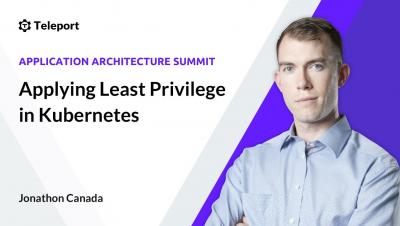
Applying Least Privilege in Kubernetes II Jonathan Canada

Scalability and Cloud-Native have driven the demand for Kubernetes, but the developer now has the harder task of building applications in a secure manner. This talk will focus on best practices for implementing least privilege and enforcing zero trust principles within Kubernetes clusters. A how-to for implementing robust Role Based Access Control (RBAC) tied into the corporate SSO/Identity provider using Teleport.

"Chain"ging the Game - how runtime makes your supply chain even more secure

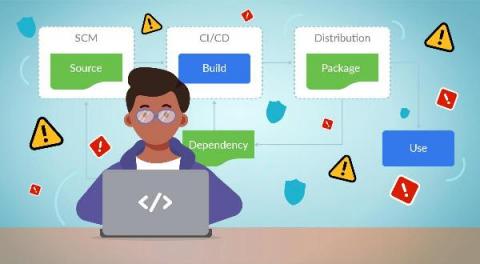
There is a lot of information out there (and growing) on software supply chain security. This info covers the basics around source and build, but does it cover all of your full software supply chain lifecycle? Is your build env at runtime protected? Is your application post deploy protected at runtime? This article will not only discuss what these concepts are, but provide additional discussions around the following: Read on brave reader…

Secure DevOps on Google Cloud: Reduce cloud and container risk

Google Cloud is helping businesses build and deploy apps faster than ever before, but at the same time, cloud teams must consider how to implement secure DevOps practices to avoid risk. We’re partnering with Google Cloud to provide security solutions to cloud teams to simplify safeguarding cloud and containers. Today, we announced our collaboration with Google Cloud.

How to meet 24 Google Cloud Platform (GCP) security best practices using open source Cloud Custodian and Falco

You’ve got a problem to solve and turned to Google Cloud Platform to build and host your solution. You create your account and are all set to brew some coffee and sit down at your workstation to architect, code, build, and deploy. Except… you aren’t. There are many knobs you must tweak and practices to put into action if you want your solution to be operative, secure, reliable, performant, and cost effective.

How to mitigate kubelet's CVE-2021-25741: Symlink exchange can allow host filesystem access

CVE-2021-25741 is a new vulnerability discovered in Kubernetes that allows users to create a container with subpath volume mounts to access files & directories outside of the volume, including the host filesystem. It was disclosed in September 2021 and affects kubelet, which is the node agent that runs on each Kubernetes node. In particular CVE-2021-25741 affects kubelet in these Kubernetes versions.

Snyk Container registry security integrations extended to GitHub, GitLab, Nexus, DigitalOcean, and more

We’re excited to share that you can now use Snyk Container to scan container images stored in many more container registries. The latest additions include Github Container Registry, Nexus, DigitalOcean, GitLab Container Registry, and Google Artifact Registry.

Why securing internet-facing applications is challenging in a Kubernetes environment

Internet-facing applications are some of the most targeted workloads by threat actors. Securing this type of application is a must in order to protect your network, but this task is more complex in Kubernetes than in traditional environments, and it poses some challenges. Not only are threats magnified in a Kubernetes environment, but internet-facing applications in Kubernetes are also more vulnerable than their counterparts in traditional environments.