Security | Threat Detection | Cyberattacks | DevSecOps | Compliance

3 observability best practices for improved security in cloud-native applications

Observability, especially in the context of cloud-native applications, is important for several reasons. First and foremost is security. By design, cloud-native applications rely on multiple, dynamic, distributed, and highly ephemeral components or microservices, with each microservice operating and scaling independently to deliver the application functionality.

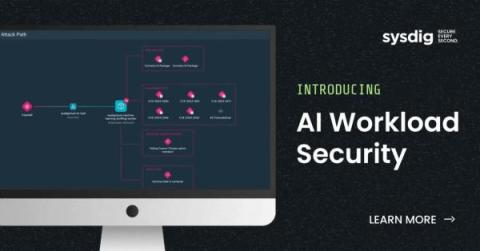
Accelerating AI Adoption: AI Workload Security for CNAPP

When it comes to securing applications in the cloud, adaptation is not just a strategy but a necessity. We’re currently experiencing a monumental shift driven by the mass adoption of AI, fundamentally changing the way companies operate. From optimizing efficiency through automation to transforming the customer experience with speed and personalization, AI has empowered developers with exciting new capabilities.

Meet the Research behind our Threat Research Team

The Sysdig Threat Research Team (TRT) is on a mission to help secure innovation at cloud speeds. A group of some of the industry’s most elite threat researchers, the Sysdig TRT discovers and educates on the latest cloud-native security threats, vulnerabilities, and attack patterns. We are fiercely passionate about security and committed to the cause. Stay up to date here on the latest insights, trends to monitor, and crucial best practices for securing your cloud-native environments.

Enhancing Kubernetes network security with microsegmentation: A strategic approach

Microsegmentation represents a transformative approach to enhancing network security within Kubernetes environments. This technique divides networks into smaller, isolated segments, allowing for granular control over traffic flow and significantly bolstering security posture. At its core, microsegmentation leverages Kubernetes network policies to isolate workloads, applications, namespaces, and entire clusters, tailoring security measures to specific organizational needs and compliance requirements.

Cloud Security Regulations in Financial Services

As the financial sector continues to adopt cloud technology, regulatory frameworks such as the updated NIS2 Directive and the Digital Operational Resilience Act (DORA) are shaping the cybersecurity landscape. Every second counts in such a complex environment: attackers can move quickly in the cloud, so defenders must change their strategies and tools to keep up. The financial sector has always been a prime target for cyber attacks, with the average breach costing almost 6 million US dollars.