Security | Threat Detection | Cyberattacks | DevSecOps | Compliance

Kubescape & Jit

Kubescape is an open-source, CNCF sandbox, end-to-end Kubernetes security tool designed to assess the security posture of Kubernetes clusters created by ARMO. It helps identify security risks and misconfigurations that could potentially be exploited by attackers, and provides automatic assistance to remediate them. Kubescape was launched less than two years ago, in August 2021, and already has more than 8.3K stars on GitHub, and over 100 open-source contributors.

Building a Kubernetes purple teaming lab

Kubernetes, and containerization in general, has a wealth of benefits for many teams operating cloud-native applications. From a threat detection standpoint, however, it is often difficult for newcomers to this space to gain the relevant hands-on experience without trampling over production environments. The Sumo Logic team has previously authored articles on Kubernetes DevSecOps vulnerabilities and best practices as well as Kubernetes logging and monitoring.

Overcoming Security Gaps with Active Vulnerability Management

Organizations can reduce security risks in containerized applications by actively managing vulnerabilities through scanning, automated image deployment, tracking runtime risk and deploying mitigating controls to reduce risk Kubernetes and containers have become de facto standards for cloud-native application development due to their ability to accelerate the pace of innovation and codify best practices for production deployments, but such acceleration can introduce risk if not operationalized properly.

Securing Cloud, Containers, and Kubernetes

Sysdig's Cloud Protection and Response platform bridges the gap between the cloud tenant, the Kubernetes workloads that run in that cloud provider, as well as the processes that are actually executed within containers running in Kubernetes. In this video, Sysdig Senior Technical Marketing Manager takes us through the platform and the best practices to secure your environment!

Run Faster, Runtime Followers

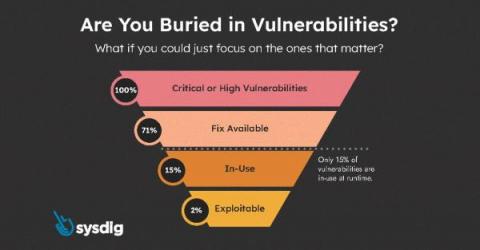
Recently, there has been a flurry of announcements claiming to have what we call Runtime Insights, the ability to prioritize vulnerabilities. Here are two examples: I can confirm that this approach works, and it works very well. It substantially decreases the number of vulnerabilities that a team has to manage, sometimes by a factor of 100 or more! How do I know it? Because Sysdig invented this approach.

Comparing Restic vs Kopia for Kubernetes Data Movement

When we began developing CloudCasa, a Software as a Service (SaaS) platform, for protecting Kubernetes applications, we looked at the data protection landscape and focused on areas that we could improve upon and give back to the user community. We wanted to provide them with a quick and efficient way in which they could start protecting this infrastructure with minimal effort, overhead, and most importantly minimal cost.

What you can't do with Kubernetes network policies (unless you use Calico)

Kubernetes documentation clearly defines what use cases you can achieve using Kubernetes network policies and what you can’t. You are probably familiar with the scope of network policies and how to use them to secure your workload from undesirable connections. Although it is possible to cover the basics with Kubernetes native network policies, there is a list of use cases that you cannot implement by just using these policies.