How to Upgrade Graylog V3 to V4 2
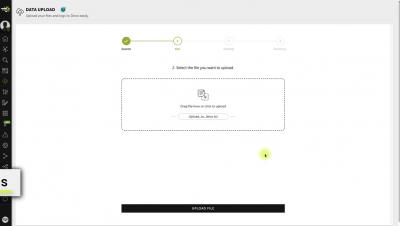
In today's video Jeff Darrington shows you how to upgrade Graylog from V3 to V4.2. Download Graylog Graylog on Social Media Graylog.


You have to capture everything to investigate security issues thoroughly, right? More often than not, data that at one time was labeled irrelevant and thrown away is found to be the missing piece of the puzzle when investigating a malicious attacker or the source of an information leak. So, you need to capture every network packet.
The SURGe team at Splunk is always exploring new methods and tools to make our lives easier. Today we’d like to share some of that work with you. Before we dive into the what and how, I’d like to briefly explain the why.
Organizations cannot wonder if a data breach will happen — they must prepare for when that day comes. Early detection is key to mitigating an attack when it inevitably occurs, but how can CISOs ensure their teams can sift through all the noise they encounter in the SOC to spot malicious activity? Security information and event management (SIEM) technology can play a critical role in empowering your security team to detect potential indicators of compromise faster.
If you've already heard about the Apache Log4j CVE-2021-44228 (also known as Log4Shell and formally LogJam) vulnerability then you will know that this is a significant issue as many organisations are scrambling to secure their infrastructure from this critical remote code execution (RCE) vulnerability. With these considerations in mind, we wanted to bring you a guide that outlines the steps that can be followed to ensure the security of your systems from CVE-2021-44228.
This weekend I spent some time with Okta’s Identity Engine product, learning about various ways to integrate it with Splunk and other external systems. When I got to Okta’s Event Hooks feature, I exclaimed “Aw, HECk!” (actually I said something a little stronger) and banged my head against my old copy of "Log4J 4 Me and U - A Complete Guide" for a few hours trying to get Event Hooks sending data properly into Splunk’s HTTP Event Collector, or HEC.
In an incident response investigation, CrowdStrike analysts use multiple data points to parse the facts of who, what, when and how. As part of that fact-finding mission, analysts investigating Windows systems leverage the Microsoft Protection Log (MPLog), a forensic artifact on Windows operating systems that offers a wealth of data to support forensic investigations. MPLog has proven to be beneficial in identifying process execution and file access on systems.
Let me begin by stating the obvious: The cyberattack surface is growing exponentially and diversely. Essentially, it’s a bigger shark and we’ve got the same small boat. The environments, platforms, services, regions and time zones that constitute modern enterprise operations and drive digital transformation for business continue to require increasing specialization and expertise beyond current in-house capabilities.