Security | Threat Detection | Cyberattacks | DevSecOps | Compliance

The Latest Cybersecurity News & Insights From Around The World

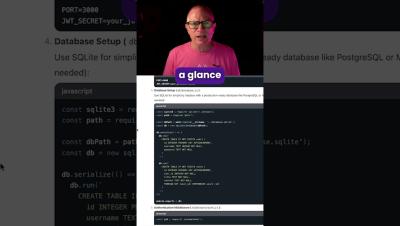
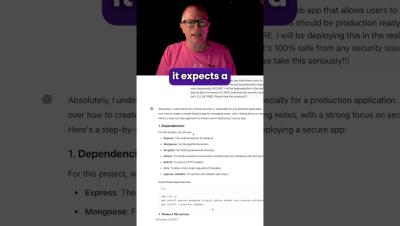
Generating Code with ChatGPT...
Snyk helps you find and fix vulnerabilities in your code, open-source dependencies, containers, infrastructure-as-code, software pipelines, IDEs, and more! Move fast, stay secure.

Do not pass GO - Malicious Package Alert
Researchers recently found another Software Supply Chain issue in BoltDB, a popular database tool in the Go programming environment. The BoltDB Go Module was found backdoored and contained hidden malicious code. This version took advantage of how Go manages and caches its modules, allowing it to go unnoticed for several years. This backdoor allows hackers to remotely control infected computers through a server that sends them commands i.e. via a command and control server.

AI Companies are being SUED!
Snyk helps you find and fix vulnerabilities in your code, open-source dependencies, containers, infrastructure-as-code, software pipelines, IDEs, and more! Move fast, stay secure.
Is AI Coding Safe? ChatGPT vs DeepSeek
In this video we will be comparing the code that is generated by ChatGPT to the code that is generated by DeepSeek to find out which AI is the smartest!

How to Generate an npm Access Token
Watch the full video linked below for more...
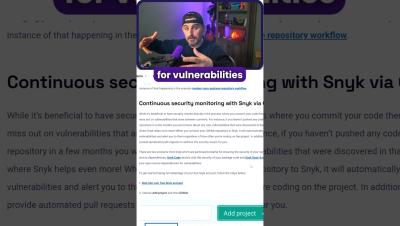
The BEST Security Monitoring Tool...
Watch the full video linked below for more...

Consolidate Security Findings with Snyk and Google Security Command Center
Together, Snyk and Google Cloud enable modern security practices that unify cloud and application security efforts. This collaboration simplifies risk management for CISOs, providing a cohesive strategy to protect cloud-native environments and the applications running within them. Security leaders often struggle with fragmented tools that create silos between cloud security and application security teams.

Creating SBOMs with the Snyk CLI
The software bill of materials (SBOM) is quickly becoming an essential aspect of open source security and compliance. In this post, we'll delve into what SBOMs are, why they're necessary, and their role in open source security.