Security | Threat Detection | Cyberattacks | DevSecOps | Compliance

SOC metrics that prove your security actually works

SOC metrics are quantifiable measures of how well a security operations center detects, investigates, and contains threats. The metrics that matter most are mean time to detect (MTTD), mean time to respond (MTTR), and incident closure rate, because together they show speed, effectiveness, and reliability, not just activity.


The cybersecurity problem hiding in your later list

Let's be honest: Every IT team has that one thing. That ancient server that nobody wants to touch somehow still runs. That vulnerability that has been sitting in the remediation queue because there were more critical issues to handle, and then there's the active service account that was created for a temporary project three years ago. Or perhaps there's a security exception that was only supposed to last for 30 days and quietly became permanent. Nothing has exploded yet, so it is easy to leave it alone.

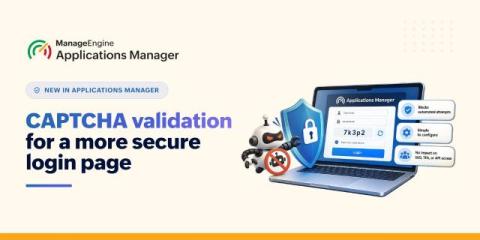
Protect Applications Manager logins with CAPTCHA validation

Login pages are one of the most attacked surfaces of any enterprise tool. They're often internet-facing, they're the front door to sensitive operational data, and unlike most vulnerabilities, they don't need to be discovered—they can simply be targeted with large volumes of automated attempts. For monitoring platforms like Applications Manager, which frequently sit with visibility into critical infrastructure, that front door matters even more.

The cyberattack your security team has no framework for

At the opening bell, your stock drops fifteen percent due to a data breach that never actually happened. Fake screenshots, a fake CEO statement, no actual hack. Your security team looks into it, but finds nothing because there's nothing to find. And the damage is already done. Gartner is calling disinformation attacks like this a top threat, and most companies aren’t prepared to handle it. For more insightful videos, visit ManageEngine Insights.

Top tips: How to tell when an app has too much access to your data

Top tips is a weekly column where we highlight what's happening in the tech world and list practical ways to navigate these developments. This week, we're looking at an everyday cybersecurity concern that often goes unnoticed: the amount of access apps have to our data and devices. We install apps to make life easier. A navigation app needs our location, a messaging app needs access to contacts, and a video-conferencing app may need the microphone and camera.

A Practical Guide to Enterprise IT Risk Assessment

Enterprise IT environments now span cloud platforms, SaaS applications, endpoints, third-party services, and AI tools, creating more opportunities for disruption, security incidents, and operational failure. IBM’s Cost of a Data Breach Report 2026 puts the global average cost of a data breach at $4.99 million, while Verizon’s 2026 Data Breach Investigations Report found that 31% of breaches started with vulnerability exploitation and 48% involved a third party.

Keep your Qualys vulnerability scanner: Fix what it finds with Patch Manager Plus

Most organizations that run a vulnerability scanner have already made a significant investment. They chose Qualys, Tenable, Rapid7, or CrowdStrike based on their detection needs, their compliance requirements, and the way their security team works. That scanner is embedded in their workflows, audit processes, and reporting chain. Then they look at their vulnerability remediation times and realize the problem is not on the scanning side.

[Webinar] Beyond security logs: Why operational context matters in security investigations

A security event tells you what happened. But understanding why —and what was happening across the environment at the same time—can make all the difference. Modern security teams have access to vast amounts of security data through SIEM platforms. Logs, events, user activity, threat indicators, and alerts provide critical evidence for detecting and investigating potential incidents.

No more blind trust: How risk-based authentication strengthens identity security

Traditional digital authentication methods have allowed users to enter and IT infrastructure if they hold the right key. Username and password alone provided limited context around the authenticity of the access attempt. But today, the person with the credentials may not claim who they are.