An incident response plan assigns responsibilities and lists procedures to follow if an event such as a breach were to occur. Having a plan put in place to handle cybersecurity incidents at your business can aid your business in identifying when a cyberattack is taking place, how to clean up the mess that an attack leaves and prevent an attack from happening again. Read on to learn why an incident response plan is needed, incidents that require response plans and more.
Did you forget your password…again? Wouldn’t it be great if you never had to deal with passwords ever again? Well, we’ve got great news for you! Meet the passkey, a brand-new passwordless technology built on industry standards by the World Wide Web Consortium (W3C) and the FIDO Alliance and backed by Apple, Google and Microsoft. Read on to find out what you need to know about passkeys – and all about how Keeper is planning to support them in 2023.
State and local governments can have a tough time employing cybersecurity solutions for reasons that range from the bandwidth it takes to find and vet the right products to the reality of budget constraints.
Credential stuffing is on the rise. The number of annual credential spill incidents nearly doubled between 2016 and 2020, according to the F5 Labs 2021 Credential Stuffing Report. Organizations need to be wary of sophisticated attackers or risk becoming a victim of a credential stuffing attack. As one of the most common account takeover techniques, your team must be equipped with the knowledge necessary to prevent this from happening.
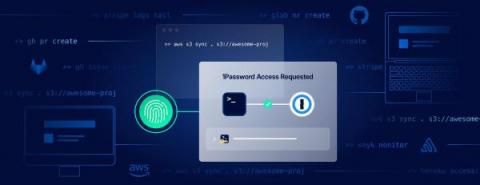
1Password Shell Plugins brings the security and ease of use of biometrics to every tool in your terminal.
Cyber insurance is a specialized insurance policy that was created to protect businesses from the losses that can occur as a result of cyber attacks. The size of your business does not matter when it comes to needing cyber insurance, and it shouldn’t be your only priority when it comes to your business’s cybersecurity. Read on to learn more about cyber insurance coverage and its cost.
Data breaches are on the rise, so it’s critical that companies properly protect their customers’ passwords. One of the ways that businesses do this is by hashing passwords before storing them.
Using unique passwords is one of the best practices for securing online accounts, but trying to memorize dozens of passwords across all your applications is nearly impossible. A password manager helps to protect access to online accounts by securely storing credentials. In this article, we discuss the features and benefits of a reliable password manager and how they work.