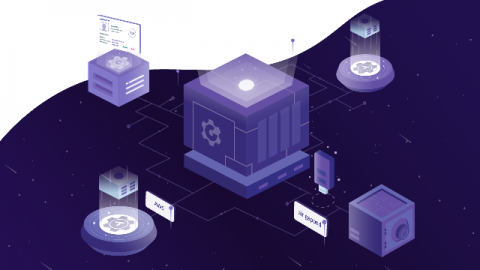
We’re excited to announce the release of Teleport 4.3 - new UI, API driven, expanded audit capabilities, and still open source. This version is so significant, we nearly called it 5.0! In this post, we’ll cover the major new features and you’ll see why we called it ‘Teleport’.
This is a major Teleport release with a focus on new features, functionality, and bug fixes. It’s a substantial release and users can review 4.3 closed issues on Github for details of all items. We would love your feedback - please pick a time slot for a remote UX feedback session if you’re interested. Teleport 4.3 includes a completely redesigned Web UI.
SCP? It’s that handy file-transfer feature of SSH, right? Well, not quite. It’s more of a hack. Or an undocumented, unstandardized mashup of two protocols. Let’s look at the exciting (and scary) details. Secure Copy Protocol (SCP) allows us to move files (and directories) between two computers. Using it is straightforward: This will copy local_file.txt to another computer (usually a server) with domain name remote_host into the /home directory.
Organizations of all sizes are currently under siege by adversaries with unlimited time and enough technical skill to exploit the cracks in our information systems and networks. All organizations have something to protect, whether large or small, and they are always looking for new technology to help against these adversaries. Zero Trust has become the latest framework to solve all of our security woes.
In under five years time, Kubernetes has become the default method for deploying and managing cloud applications, a remarkably fast adoption rate for any enterprise technology. Amongst other things, Kubernetes’s power lies in its ability to map compute resources to the needs of services in the current infrastructure paradigm. But how does this tool work when faced with the new infrastructure layer that is blockchain? Can the two technologies be used in conjunction?
As one of the engineers on the Gravity team here at Gravitational, I was tasked with adding SELinux support to Gravity 7.0, released back in March. The result of this work is a base Kubernetes cluster policy that confines the services (both Gravity-specific and Kubernetes) and user workloads. In this post, I will explain how I built it, which issues I ran into, and some useful tips I’d like to share. Specifically, we will look at the use of attributes for the common aspects of the policy.