Security | Threat Detection | Cyberattacks | DevSecOps | Compliance

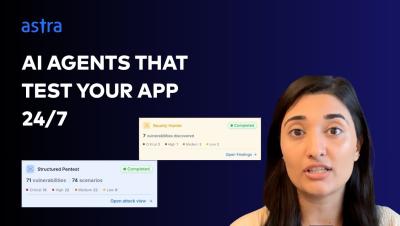
Autonomous Pentesting: AI Agents That Test Your App 24/7

Most companies pentest their app once a year. Hackers look for new backdoors every single day. Astra Autonomous Pentesting closes that gap with AI security agents that test your web app continuously, 24/7. Traditional penetration testing gives you a giant report full of jargon that sits on a shelf. Astra works like a friendly hacker that never sleeps. When it finds a security weakness, it doesn't just send a scary alert. It explains the exact problem, with the attack story and proof, so clearly that AI coding tools can fix, test and repair the vulnerability the same day.
A Quiet Shift In Security Every Healthcare Compliance Team Should Read

Change Healthcare took down a third of US claims processing. Ascension spent weeks on the papers. OCR settlements keep citing “risk analysis failure,” and HITRUST r2 assessors are asking harder questions about what actually got tested versus what got scanned. The math on pentesting shifted in the middle of all that. In 2024, 1 in 40 findings was Critical. In 2025, it’s 1 in 10.

Zero-Day Attack Prevention: Catching Unknown Vulnerabilities Before Threat Actors Do

On September 1, 2026, OpenAI announced that its Astra model had reached the Critical tier for cyber capability under the company’s Preparedness Framework, a first for its systems. While working through an internal benchmark of 20 recently disclosed vulnerabilities in Google’s V8 engine, the model found two zero-days that no one had asked it to look for and used them in a working exploit chain. OpenAI is disclosing both flaws and restricting the capability to vetted testers.

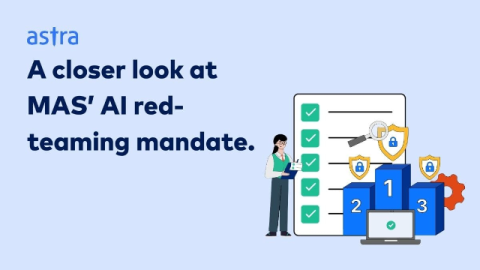
Singapore & MAS AI Red Teaming Requirement: A Closer Look

Security leaders at key financial institutions in Singapore now have a new line in their compliance calendars: AI-assisted red teaming, a requirement MAS introduced on 1 July 2026. What appears to be a scoping exercise actually asks a harder question, i. e., how does a bank differentiate between another convincing report and one that secures the institution?

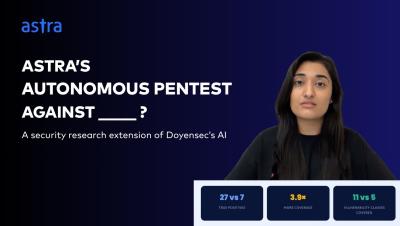
Astra's Autonomous Pentest Against Other Tool

Astra vs. Other Tool: Who Finds More Real Vulnerabilities? How does Astra Autonomous Pentesting compare with the other tool when it comes to finding real-world vulnerabilities? In this independent benchmark, Astra was tested against the other tool to evaluate vulnerability coverage, depth, and true-positive findings. The results: 27 true-positive vulnerabilities identified 3.9× more vulnerability coverage 11 distinct vulnerability classes discovered Deep testing across business logic and application behaviour.

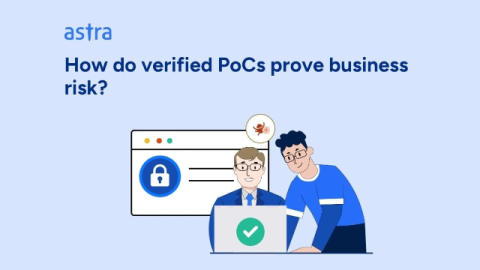
Beyond the Scanner: How Verified PoC exploits Prove True Business Risk

On September 1, OpenAI announced that its new model, GPT-6 Astra, had become the first to cross the “Critical” cybersecurity threshold in the company’s Preparedness Framework. Most coverage focused on the safety implications, and fairly so, but buried in the announcement sits a benchmark result that should change how every security leader reads their next vulnerability report.

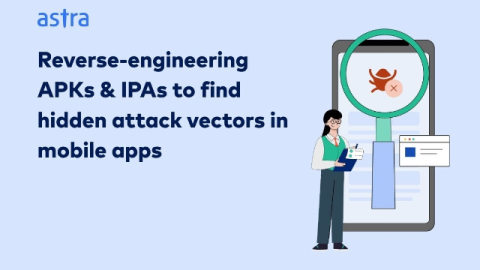
Mobile App Security: Reverse-Engineering APKs and IPAs to Uncover Hidden Attack Vectors

Buried in OpenAI’s evaluations of its GPT-6 Astra model sits a finding that mobile teams should sit with for a minute. The model reverse-engineered compiled software well enough to escape a browser sandbox and chain privilege-escalation flaws on a hardened operating system, according to the company’s published evaluations. Reading compiled binaries used to be specialist work priced in weeks, and now it’s something machines do quickly and well.