Security | Threat Detection | Cyberattacks | DevSecOps | Compliance

OPC UA Exposure Snapshot: A Year in Review of Internet-Facing Devices

Over the past year, Bitsight TRACE has identified 14,220 unique internet-exposed Open Platform Communications Unified Architecture (OPC UA) servers globally. Given OPC UA's critical role as a communication backbone for modern industrial control systems (ICS) across numerous sectors, this level of exposure warrants a closer look. Our analysis reveals that over half (51.74%) of these devices allow unauthenticated access, while 80.26% transmit data in plaintext without encryption or integrity protection.

How Early Signals Surfaced by Dark Web Intelligence Enhance Supply Chain Cyber Resilience

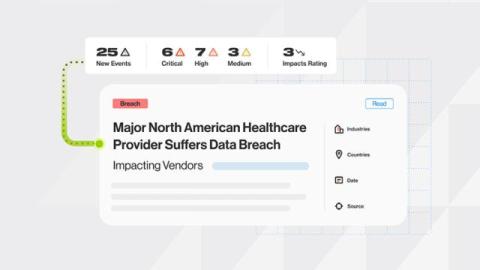
Organizations are facing a complicated and unwieldy cybersecurity perimeter due to the sprawling web of third-party dependencies that now account for 30% of all data breaches. This network of interconnected applications and infrastructure gives threat actors an opportunity through an extended attack surface to exploit organizations. Attackers are also moving faster by leveraging AI to weaponize zero-day vulnerabilities in days rather than weeks, and most organizations remain dangerously behind the curve.

Why Threat Actor Context Matters for Cyber Risk Prioritization

Cyber threat intelligence is often presented as a catalog of named threat actors, past incidents, and attribution labels that promise clarity. For defenders trying to understand risk, this structure feels reassuring. It suggests that threats can be identified, tracked, and anticipated based on observed behaviors. In practice, that confidence is often overstated.

Beyond Indicators: Gaining Context with Adversary Intelligence

Actions have consequences. In cybersecurity, we often only see actions at the surface level: a suspicious IP, a new domain, or a single mention on a dark web forum. For threat hunters, the consequences of treating these actions as isolated incidents are significant. These signals are rarely "one-offs." They are the visible tips of coordinated campaigns built on months of planning, spanning multiple tactics, techniques, and procedures (TTPs). Today’s adversaries are organized.

Why Patching Cadence Should Be a Risk Priority in 2026

Patching cadence is a critical component of maintaining an organization’s cybersecurity posture. It refers not just to whether patches are applied, but how quickly and consistently vulnerabilities are addressed across systems and software. A regular, timely patching process reduces the window of exposure to known vulnerabilities, limiting opportunities for exploitation and strengthening overall vulnerability management.

A Match Made in Heaven: How Valentine's Day Fuels Seasonal Phishing Attacks

Valentine’s Day runs on emotion. Surprise, urgency, curiosity, trust, love. For threat actors, that combination is hard to beat. Every year in mid-February, security teams see the same pattern. Phishing campaigns pick up. Brand impersonation increases. Fraud attempts follow close behind. It is not because attackers suddenly developed new techniques.

Dark Web Intelligence for Supply Chains: From Reactive TPRM to Threat-Led Defense

Modern cyberattacks rarely start where defenders are looking. Instead of targeting the enterprise head-on, attackers increasingly move through sprawling ecosystems of vendors, suppliers, and partners, exploiting trust relationships, weak controls, and delayed visibility.

Bitsight: AI-powered intelligence that outsmarts cyber risk

Bitsight is the global leader in cyber risk intelligence, leveraging advanced AI to empower organizations with precise insights derived from the industry’s most extensive external cybersecurity dataset. With more than 3,500 customers and over 68,000 organizations active on its platform, Bitsight delivers real-time visibility into cyber risk and threat exposure, enabling teams to rapidly identify vulnerabilities, detect emerging threats, prioritize remediation, and mitigate risks across their extended attack surface.

Cybersecurity "Armageddon": Are You Ready?

When it comes to cybersecurity, there’s no such thing as being too prepared. In this clip, Ryan Swimm, Senior Manager, GRC Program from Bitsight explains why "softball" security drills just don't cut it. To truly protect your organization, you need to practice for the worst-case scenario—your own "Armageddon" drill. Inside the Drill: Don't wait for a real crisis to find the gaps in your strategy. Practice for doomsday today!