Security | Threat Detection | Cyberattacks | DevSecOps | Compliance

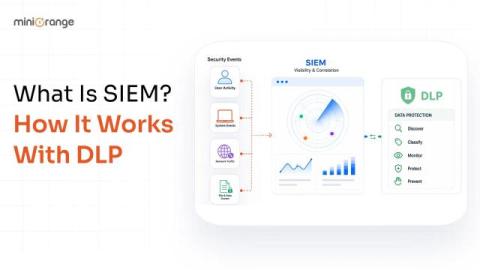
Best Enterprise DLP Tools for AI Data Risk (2026 Comparison)

Employees move sensitive data into AI tools every day. Someone pastes customer records into ChatGPT to draft an email. A developer feeds proprietary source code into a coding assistant to fix a bug. A project manager drops a confidential contract into Gemini to summarize it for a meeting. According to research from Cyberhaven Labs, 39.7% of the data employees share with AI tools is sensitive, and enterprise adoption of endpoint-based AI agents grew 276% in the past year alone.

7 Generative AI Security Risks and How to Defend Your Organization

Generative AI creates new attack surfaces that traditional security tools were not designed to address. The biggest generative AI security risks include prompt injection, data leakage, shadow AI, compliance exposure, model poisoning, insecure RAG pipelines, and broken access control. Each one requires a specific defense, not a generic firewall or DLP rule.

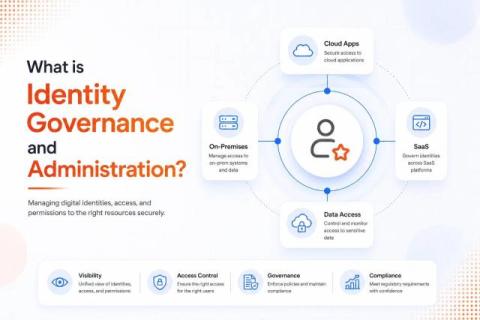
Secure SSO: How Multi-Factor Authentication Strengthens Single Sign-On Security

The most common first move in a modern cyberattack isn't a zero-day exploit or a piece of custom malware. It's a username and a password. Attackers know that credential theft is the fastest path into an enterprise network. And when an organization implements Single Sign-On (SSO), that path gets shorter. One stolen credential equals access to dozens of applications.

5 Major Benefits of Automated User Provisioning for JD Edwards

Managing JD Edwards user access by hand quickly becomes a hardship, especially as your team grows and roles shift constantly. You end up with deprovisioning that drags on for weeks, role assignments that don't match job descriptions, and audit trails scattered across emails and spreadsheets. These aren't one-off problems. They happen predictably when manual processes try to handle enterprise-scale demands in a fast-moving business environment.

The hidden cost of compliance theater: what your audit score doesn't tell the board

A strong audit score can feel like a victory. It looks neat, reassuring, and board-friendly. But a high score can also hide the most important question of all: whether the business is actually safer, more resilient, and better prepared when something goes wrong. That gap is where compliance theater lives. It is a polished performance of compliance, but it lacks the underlying strength.

Tines achieves the ISO trifecta; ISO 27001, ISO 27701, and ISO 42001 certification

Today, we’re proud to share that Tines has achieved ISO 27001, ISO 27701, and ISO 42001 certification. This marks an important milestone in how we continue to effectively manage information security, privacy, and AI governance across our business and platform. For you, this is about more than achieving the ISO trifecta.

11:11 Systems Named an Aspiring Vendor in 2025 Gartner Peer Insights Voice of the Customer for DRaaS Report

At 11:11 Systems, we’ve always believed that disaster recovery is about much more than the underlying technology. It’s about cyber resilience, business continuity, and exceptional customer outcomes. Recently, 11:11 Systems was named an Aspiring Vendor in the 2025 Gartner Peer Insights Voice of the Customer for Disaster Recovery as a Service (DRaaS) report. This marks the third year 11:11 has received this recognition.

Understanding Cloudflare's network architecture

For decades, enterprise IT relied on a “hub and spoke” security model. But between the explosion of cloud infrastructure, SaaS apps and a remote workforce, that old perimeter hasn't just cracked—it’s shattered. In an attempt to stay on top of the advancing perimeter, many different solutions from many vendors entered the market and created a "spaghetti mess" of point solutions that drive up costs and tank user experience. Cloudflare is an answer to this problem, delivering everything you need to secure your apps, networks, users, data and devices.

"It's Quite a Shock": The Quantum Deadline Is Real

In this World Quantum Day special edition of This Week in NET, host João Tomé is joined by Bas Westerbaan (Principal Research Engineer) and Sharon Goldberg (Senior Director, Product) to explain why the timeline for post-quantum cryptography may be arriving sooner than expected. Recent research suggests the number of qubits required to break today’s encryption could fall dramatically, accelerating the urgency for companies and the Internet ecosystem to migrate to post-quantum security. Google has set a 2029 migration target, and Cloudflare is working toward a similar timeline.