


Security | Threat Detection | Cyberattacks | DevSecOps | Compliance

Challenges in Ensuring AI Data Privacy Compliance [& Their Solutions]

What happens when the AI feature you shipped last quarter is compliant in one region—but illegal today in another? That’s the new normal. In 2025, the EU AI Act, new U.S. state privacy laws, China’s PIPL, and APAC rules are reshaping how organizations collect, process, store, and share data for AI. Privacy isn’t a back-office task anymore; it’s a front-line guardrail for product, security, and data teams.
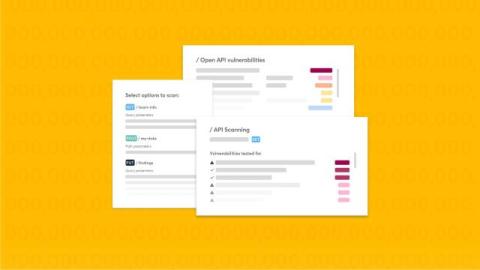

Introducing Dynamic API Scanning

Application environments are more complex than ever, with APIs forming the critical connective tissue. But this proliferation has created a vast, often invisible, attack surface. Security teams are caught in a difficult position: compliance frameworks like PCI and SOC 2 demand API scanning, but offer little guidance. Meanwhile, you’re grappling with incomplete API inventories, and the market is a confusing mix of expensive, hard-to-instrument niche tools.

Beyond the Hype: The Veracode AI-Advantage in Application Security

For years, the cybersecurity industry has hyped AI as a game-changer, but what vendors often delivered was basic machine learning driven or simple predefined rules. The rise of ChatGPT and similar tools dramatically reshaped the landscape, prompting vendors to hastily identify real AI use cases in their offerings.

Illuminate AI Adoption with AIBOMS

An AI Bill of Materials (AIBOM) addresses this gap. It is a concise, living profile for every AI capability an organization can invoke—models, agents, SaaS features, plug‑ins, and APIs. Kept in a machine‑readable format, it serves as a practical record that can inform runtime decisions in a control plane. An AIBOM summarizes five things about each AI capability: who provides it, what it can do, what data it sees, where it runs, and how it should be treated.

How Device Intelligence Detects Fraud Without Using Personal Data

Fraud tactics now evolve on an hourly cycle. For banks, fintech, digital lenders, and payments players, the question isn't whether rules still help - it's whether they adapt fast enough. Recent numbers from Alloy's 2024 Financial Fraud Statistics underscore the shift: over 50% of surveyed institutions saw business fraud rise, two-thirds reported higher consumer fraud, and generative AI could drive $40B in bank losses by 2027. It's no surprise that more than half are raising third-party spend, with three in four prioritizing identity risk capabilities.

Ignite Creativity Using AI Image Generation Technology

In today's digital landscape, visual content has become paramount, with studies showing that posts with images receive 352% more engagement than those without. Yet, creating professional-quality visuals remains a significant challenge for many content creators, demanding substantial time, resources, and expertise. Innovative solutions like Kling AI are revolutionizing the way we create visual content. By harnessing the power of advanced artificial intelligence, creators can generate stunning, professional-grade images in minutes rather than hours.

Leveraging Social Media for Educational Fundraising and Advocacy

Effective fundraising and advocacy for educational institutions have moved into the digital sphere through social media platforms. Schools, colleges, and nonprofits utilize these channels to engage with their communities, build awareness, and drive financial support. This approach opens up new avenues for generating funds and allows organizations to tap into broader networks.

MMP for Ads Performance Tracking and Optimization

Mobile advertising has evolved into a highly competitive and data-driven arena. For marketers, the ability to measure campaign results with precision can be the deciding factor between a successful ad strategy and wasted budget. While ad platforms provide their own analytics, they tend to offer fragmented views that make cross-channel comparisons challenging.

Seven ways AI could impact the future of pen testing

In an era where attack surfaces are expanding faster than ever, AI has the potential to transform how organizations find and fix vulnerabilities. Gartner estimates AI agents will reduce the time it takes to exploit account vulnerabilities by 50%. From automating routine scans to developing self-learning attack agents, AI is already changing the red team playbook – and the pace of innovation shows no signs of slowing.