Security | Threat Detection | Cyberattacks | DevSecOps | Compliance

Mastering EU AI Act Compliance: Strategies for Data Governance and Security

Organisations must adopt robust compliance strategies to align with the EU AI Act’s stringent requirements. This involves implementing effective data governance frameworks, ensuring data quality and integrity, and leveraging advanced data security solutions.
Navigating the EU AI Act: Why Compliance is Key to AI Innovation and Security

The European Union’s AI Act, set to be enforced in 2025, is set to transform how businesses approach artificial intelligence. Designed to regulate AI development and deployment, the Act aims to ensure ethical, safe, and transparent AI usage. However, many organisations still struggle with compliance.

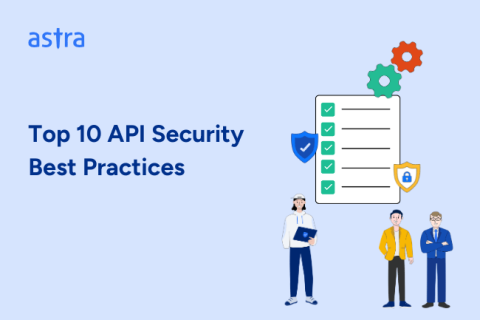
Top 10 API Security Best Practices

Every day, organizations expose their APIs, unknowingly allowing cybercriminals to try and exploit them. A single vulnerability can lead to massive data breaches or help gain unauthorized access. Worst Part? Most organizations realize the weakness when it’s already too late. Without strong security measures, your API is a prime target for attackers trying to exploit unpatched vulnerabilities or misconfigurations in the environments.

Detecting sensitive data and misconfigurations in AWS and GCP with Cloudflare One

Today is the final day of Security Week 2025, and after a great week of blog posts across a variety of topics, we’re excited to share the latest on Cloudflare’s data security products. This announcement takes us to Cloudflare’s SASE platform, Cloudflare One, used by enterprise security and IT teams to manage the security of their employees, applications, and third-party tools, all in one place.

Enhance data protection in Microsoft Outlook with Cloudflare One's new DLP Assist

Cloudflare Email Security customers using Microsoft Outlook can now enhance their data protection using our new DLP Assist capability. This application scans emails in real time as users compose them, identifying potential data loss prevention (DLP) violations, such as Social Security or credit card numbers. Administrators can instantly alert users of violations and take action downstream, whether by blocking or encrypting messages, to prevent sensitive information from leaking.