Security | Threat Detection | Cyberattacks | DevSecOps | Compliance

Detecting CVE-2022-21907, an IIS HTTP Remote Code Execution vulnerability

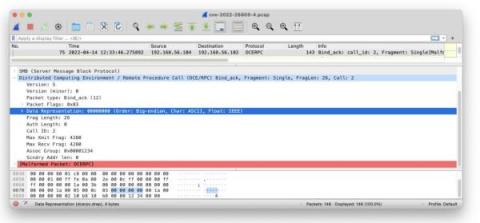
In January 2022, Microsoft disclosed a remote code execution vulnerability for Internet Information Server (IIS) identified as CVE-2022-21907, which they have subsequently reported as wormable. Through Microsoft, Corelight Labs was able to review a proof of concept for an attack against the vulnerability. This blog presents an open source detection method that Corelight Labs is releasing to detect exploit attempts of CVE-2022-21907.

No BS security: detect and automate with LimaCharlie & Tines

Why is there so much BS involved in the building and selling of security software? The security stack of the future – and of today, in the best companies – is composed of tools that focus on doing one thing extremely well, with transparent value and pricing, packaged in a product that the team will actually enjoy using. Join Eoin & Maxime, the founders of Tines and LimaCharlie, as we explore why "No BS" is the future of security, and put our own products to the test: building an end-to-end sophisticated detection and response flow using the free, ungated versions of our products.

Arctic Wolf Joins Gartner Peer Insights Customer First Program

Arctic Wolf joins the Gartner Peer Insights Customer First Program in the vulnerability assessment and managed detection and response service. The members of the Arctic Wolf team are excited to announce that we have pledged to be a Customer First vendor in the vulnerability assessment and managed detection and response service. Our team at Arctic Wolf takes great pride in this program commitment, as customer feedback continues to be a critical priority and shapes our products and services.

Monitoring your AWS environment for vulnerabilities and threat detection

Managing the security of your Amazon Web Services (AWS) environment requires constant vigilance. Your strategy should include identifying potential threats to your environment and proactively monitoring for vulnerabilities and system weaknesses that malicious actors might exploit. In a complex environment—such as your AWS account with a multitude of services, coupled with various architectures and applications—the ideal solution should be both comprehensive and straightforward.

Introducing ATT&CK Detections Collector

The Splunk SURGe team loves to automate and simplify mundane tasks. Through rapid response blogs, we provide context and analysis on late breaking security events that affect everyone, not just Splunk customers. We are firm believers that through shared knowledge and experience we can help the masses better understand the threat landscape and how they can improve their security posture.

A Review of Log4Shell Detection Methods

Ever since the public exploit of the Log4Shell remote code execution (RCE) vulnerability became known on December 10, 2021, security teams have been scrambling to understand the risk to their environments. Part of that scramble has been to ascertain which tools are best positioned to help detect the vulnerability. Which approaches are most effective and where do they fall short?

Detecting Log4j exploits via Zeek when Java downloads Java

We have published an initial blog on the Log4j exploit and a followup blog with a second detection method for detecting the first stage of exploits occurring over LDAP. Today, we will discuss a third detection method, this one focused on the second-stage download that happens after the first stage completes. In this case, the JVM will download additional Java code payloads over HTTP.