Security | Threat Detection | Cyberattacks | DevSecOps | Compliance

The Latest Cybersecurity News & Insights From Around The World



The Rules Have Changed AI vs AI #aisecurity #ai
Mend.io, formerly known as Whitesource, has over a decade of experience helping global organizations build world-class AppSec programs that reduce risk and accelerate development -– using tools built into the technologies that software and security teams already love. Our automated technology protects organizations from supply chain and malicious package attacks, vulnerabilities in open source and custom code, and open-source license risks.

The Two AI Licenses You Need to Know
Mend.io, formerly known as Whitesource, has over a decade of experience helping global organizations build world-class AppSec programs that reduce risk and accelerate development -– using tools built into the technologies that software and security teams already love. Our automated technology protects organizations from supply chain and malicious package attacks, vulnerabilities in open source and custom code, and open-source license risks.
MCP security is non-negotiable for AI-driven organizations
Model Context Protocol (MCP) is gaining traction because it enables LLMs to interact with live systems and enhance context by retrieving and managing relevant real-time information. LLMs can’t query Salesforce, trigger an Okta password reset, or fetch context from your SIEM, for example. MCP bridges that gap by connecting AI models to real-world APIs, powering AI applications like retrieval-augmented generation and multi-step agent workflows. They’re fast to deploy.
Beyond the Prompt: Securing the "Brain" of Your AI Agents
Imagine an autonomous AI agent tasked with a simple job: generating a weekly sales report. It does this reliably every Monday. But one week, it doesn't just create the report. It also queries the customer database, exports every single record, and sends the file to an unknown external server. Your firewalls saw nothing wrong. Your API gateway logged a series of seemingly valid calls. So, what happened? The agent wasn't hacked. Its mind was changed.
IBM 2025 Cost of a Data Breach Report: Lessons for API and AI Security
IBM’s 2025 Cost of a Data Breach Report offers one of the clearest and most comprehensive views yet of how AI adoption is shaping the security landscape. While breach numbers are relatively low – only 13% of organizations reported breaches involving AI models or applications – the report reveals a troubling pattern: APIs and integrations are often the real entry point, and they’re frequently under-secured. At Wallarm, we’ve been banging this drum for a while.
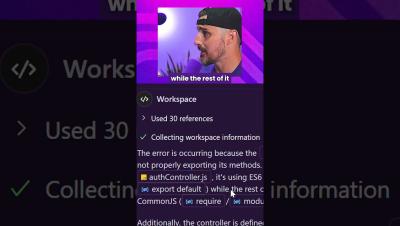
Claude Opus 4.1 and Github Copilot Causes a Coding Error
Claude Opus 4.1 and Github Copilot Causes a Coding Error.

When AI Agents Go Awry
When your AI agents go awry, rewind those changes easily with Agent Rewind from Rubrik. As AI agents gain autonomy and optimize for outcomes, unintended errors can lead to business downtime. Agent Rewind will enable organizations to undo mistakes made by agentic AI by providing visibility into agents' actions and enabling enterprises to rewind those changes to applications and data. We’ve integrated Predibase's advanced AI infrastructure with Rubrik's recovery capabilities to enable enterprises to embrace agentic AI confidently.
Can AI hackers access the smart devices in my home? #ai #cybersecurity
New research shows how attackers could hijack Google's Gemini AI through a simple calendar invite to control smart lights, shutters, and even boilers. The key insight from our latest podcast is that it's not about the AI vulnerability, it's about network segmentation. The real lesson? Don't give AI systems direct access to your physical devices. The simple fix is to segment your IoT devices on separate networks.
Adapting to the Changing AI Threat Landscape
Adapting to the Changing AI Threat Landscape In this video, A10 Networks' security leaders, Jamison Utter, Madhav Aggarwal, and Diptanshu Purwar, discuss the evolving security risks associated with AI and Large Language Model (LLM) adoption, as well as what organizations must do to stay protected. Diptanshu Purwar outlines key shifts in the approach to AI security.