

Security | Threat Detection | Cyberattacks | DevSecOps | Compliance

A New Chapter in Mobile Security: Tackling Human Risk with AI-Powered Social Engineering Protection

This week marks a milestone in the evolution of mobile endpoint security. At a time when attackers are moving faster and targeting smarter, Lookout is proud to unveil a breakthrough initiative: AI-powered social engineering protection—the first solution of its kind built to detect and disrupt human-targeted attacks at the mobile edge.

Why AI Infrastructure Growth Demands Next-Gen Cybersecurity and PAM

Global Artificial Intelligence (AI) infrastructure spending is projected to surpass $200 billion by 2028, according to research from the International Data Corporation (IDC). As organizations rapidly deploy more complex AI systems, the demand for high-performance infrastructure, like Graphics Processing Units (GPUs) and AI accelerators, is surging. This growth exponentially increases computing power, energy consumption and data exchange across hybrid and cloud environments.

The Nightfall Approach: 5 Ways Our Shadow AI Coverage Differs from Generic DLP

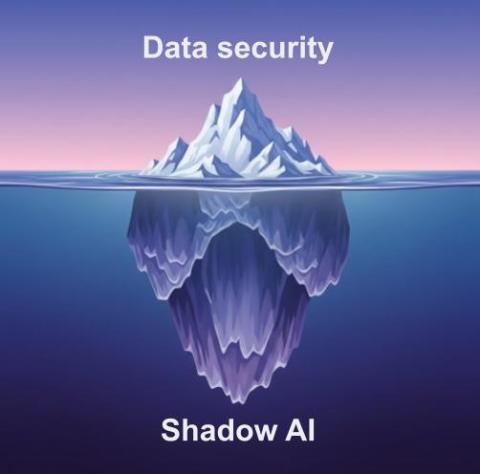
Shadow AI refers to the unauthorized or unmonitored use of AI tools (like ChatGPT, Copilot, Claude, and Gemini) by employees in the workplace. It’s now one of the fastest-growing data exfiltration vectors. Employees are pasting source code, customer or patient data, contract terms, and even M&A info into gen AI tools, often without realizing the risk. And many legacy DLP tools are still catching up.

Riscosity Launches The DFPM Trust Center

For a AI software company like Riscosity, which helps organizations secure and govern data flows to third parties, compliance is not just a regulatory requirement—it is central to the value proposition. Recognizing this, Riscosity has launched a dedicated Trust Center at trust.riscosity.com, powered by industry leader Vanta, to streamline how it communicates its compliance posture with current and prospective customers.

What is Data Poisoning? Types, Impact, & Best Practices

Data poisoning is a type of cyberattack where malicious actors deliberately manipulate or corrupt datasets meant for training machine learning models, especially large language models (LLMs). Tampering parts of a raw data set with an incorrect, often duplicitous one can negatively impact the result in various ways. Fundamentally, it aims to alter how AI models learn information so that the output is flawed.

Shifting from Vulnerability Management to Security Risk Prioritization with AI

The adage ‘an ounce of prevention is better than a pound of cure’ applies to AppSec vulnerability management. Traditionally, AppSec has focused on a reactive ‘curing flaws’ paradigm, identifying and fixing vulnerabilities after they have occurred. However, the never-ending escalation between threats and security leads to alert fatigue and security debt.