Link11 has fully integrated DOSarrest and Reblaze to become one of Europe's leading providers of network security, web application security, and application performance.
There are rare moments when the technology world takes a massive leap forward. Today is one of those moments. At Salt Security, we have always believed that APIs form the connective tissue of the modern enterprise. As AI accelerates the pace of business beyond anything we’ve seen before, a simple truth has become clear: The way we discover, understand, and secure APIs must evolve, or we will be left behind.
Wallarm lets you upload OpenAPI/Swagger specs and block anything that falls outside of the expected behavior. It's called Positive Security Enforcement, and it works. Control your API behavior with precision.
APIs (Application Programming Interfaces) are the invisible backbone of everything from mobile banking to cryptocurrency exchanges. These powerful interfaces enable transactions to become frictionless, allowing data to be shared in real-time and services to be integrated in new ways across platforms, thereby transforming the way financial services operate and delivering customer value. But that very interconnectedness that drives innovation also creates new points of risk.
We recently released The Rise of Agentic AI, our API ThreatStats report for Q1 2025, finding that evolving API threats are fueled by the rise of agentic AI systems, growing complexity in cloud-native infrastructure, and a surge in software supply chain risks, and uncovered patterns and actionable insights to help organizations prioritize risks and harden their defenses. Keep reading to find out more.
API security is no longer just a concern; it’s a critical priority for businesses. With APIs serving as the backbone of modern applications, they’ve become a primary target for attackers. While automated security testing tools help detect vulnerabilities, their limitations leave organizations exposed to evolving threats. Here’s where Threat Replay Testing (TRT) comes into play.
In the race to scale digital platforms, security should never slow you down. Yet, many security solutions are often rigid, complex, and operationally intrusive. That’s why we built AppSentinels to deliver robust API protection without disrupting performance, processes, or peace of mind. From day one, AppSentinels was engineered with operational ease at its core—so security and DevOps teams can sleep easy, knowing their APIs are secured by design. Here’s how we do it.
Not all attacks are obvious. Some happen slowly, over time. Wallarm’s API Abuse Detection tracks abnormal user behavior to stop stealthy threats. Get ahead of attackers before they exploit your logic.
In today's fast-paced world of digital transformation, APIs serve as the backbone of modern applications, enabling innovation and efficient data sharing. Nevertheless, the rise in API usage has expanded the attack surface, making solid security protocols essential. This post delves into how the partnership between Salt Security and HCL AppScan API Security is transforming API governance, equipping organizations to actively manage API security through thorough discovery and contextual risk assessment.
Wallarm scans your external environment to identify APIs across all protocols — including undocumented or insecure ones. API Discovery helps security teams gain real-world visibility into their ecosystem.
APIs are now the most attacked layer in the application stack— APIs are being hit 68% more often per host than traditional web apps with APIs facing 1600% more DDoS traffic than web apps. This was found in the state of application security 2024 report where we analyzed 2 billion API attacks blocked on AppTrana WAAP. This isn’t surprising. APIs are inherently automation-friendly, often underprotected, and expose direct access to data and logic.
Over the past few weeks, the topic of tariffs has dominated headlines internationally. These trade measures have triggered global economic volatility, with the European Union (EU) pausing its retaliatory tariffs to allow room for negotiation. While the immediate focus is on economic ramifications, it's crucial to recognize the less visible, yet significant, impact these tariffs can have on cybersecurity infrastructures, especially in the realm of API security.
Most orgs don’t even know how many APIs they have. And if you can’t see them — you definitely can’t secure them. Wallarm shows why API visibility is the foundation of modern protection.
In today’s rapidly changing digital environment, APIs play a crucial role in modern business, facilitating smooth connectivity and data sharing. Yet, this interconnected nature brings significant security and privacy risks, as evidenced by the Federal Trade Commission's (FTC) recent settlement with GoDaddy. This settlement serves as a stark reminder that strong API security is no longer just a good security practice but is now a legal obligation.
Welcome to Episode 8 of Founder's Corner Join Salt’s CEO and Co-founder, Roey Eliyahu, and CMO, Michael Callahan, as they discuss Gen AI and its impact on API security.
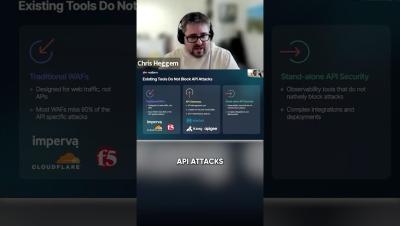
Traditional tools can't stop API attacks — Wallarm can. Our platform goes beyond observability to detect and block malicious API behavior in real time. Discover how Wallarm keeps your APIs secure where other tools fall short.
In an increasinglydigital world, the demand for flexible, scalable and agile web experiences has never been higher. The company can use a headless CMS with their own frontend framework and use it to customize the web page to the maximum limit they want for the bestperformance and still owning the UI components which are more suitable and they are aiming to achieve.
Wallarm Research has just released a powerful new Nuclei template targeting a new kind of exposure: the Model Context Protocol (MCP). This isn’t about legacy devtools or generic JSON-RPC pinging. It’s about the protocol fueling next-gen LLM applications — and it’s already showing up exposed in the wild.
In today’s dynamic digital landscape, applications are the backbone of modern businesses. They drive operations, facilitate customer interactions, and manage critical data. However, the intricate web of rules and processes that govern these applications – the business logic – often presents a significant, yet frequently overlooked, attack surface.
In this video, we’ll show you how to integrate Astra’s API Security Platform with your Kubernetes cluster using an NGINX Ingress controller. This setup allows Astra to passively observe live API traffic flowing through your ingress, enabling continuous vulnerability detection without interrupting your application. We'll cover.
In this step-by-step tutorial, we’ll walk you through setting up Astra’s API Traffic Collector inside a Kubernetes environment. This integration enables you to mirror live traffic to Astra's security engine—without impacting performance—so you can uncover vulnerabilities in real-time, without needing to configure test environments or rerun tests manually. You'll learn how to.
On March 25, 2025, NIST released the initial public draft of NIST SP 800-228, "Guidelines for API Protection for Cloud-Native Systems." The document provides a comprehensive framework for securing APIs in cloud-enabled environments. However, for organizations looking to align with these objectives, the tooling requirements may seem initially overwhelming. Fortunately, Wallarm helps streamline the process by integrating many of these recommendations into a single, cloud-native solution.
You may have a WAF or an API Gateway in place — but your APIs are still vulnerable. Traditional tools weren’t built to detect or block API-specific threats in real time. Wallarm explains why modern API protection requires more than legacy security tools.
Join us for a webinar that explores the challenges of securing APIs, which are increasingly critical to modern organizations. We will discuss the key issues facing API driven companies today, including hidden APIs and sophisticated attacks that can disrupt operations. We'll examine real-world examples of API vulnerabilities and the solutions to address them. We'll cover the essential criteria for selecting an API security product that fits your organization's needs.
Securing PCI and PII data is at the core of what we do at Protegrity. You can try out Protegrity’s capabilities today, through our API Playground. This section walks you through some sample scenarios of de-identifying PCI data, so that it is removed from your environment and only reversed once it leaves it. To run this example, you have to be signed up to the Protegrity API Playground.
Agentic AI is transforming business. Organizations are increasingly integrating AI agents into core business systems and processes, using them as intermediaries between users and these internal systems. As a result, these organizations are improving efficiency, automating routine tasks, and driving innovation. But these benefits come at a cost. AI agents rely on APIs to access data and functionality from underlying systems. Without APIs, AI agents are useless.
Wallarm’s honeypot research revealed a startling fact: on average, it takes only 29 seconds for exposed APIs to be discovered in the wild. That means any misconfigured or undocumented API is a ticking time bomb. If you're not protecting your API surface, attackers will find their way in — fast. Learn why real-time API protection is no longer optional and how Wallarm helps stop threats before they breach your systems.
In the current economic environment, IT and security leaders face significant challenges. Budget optimization and prioritizing initiatives that provide real business value are crucial, particularly amidst a growingly complex and threatening threat landscape. This pressure is especially pronounced when it comes to securing the APIs essential for modern applications and linking vital data.
In an era where APIs form the backbone of every digital experience, security can no longer be an afterthought—or a bottleneck. The real challenge lies not just in detecting threats, but in doing so accurately, with clear explainability, and at enterprise scale. At AppSentinels, we built our platform from the ground up to tackle modern threats with unmatched efficacy.
APIs are the backbone of modern apps, but they also introduce some serious security risks. Attackers are constantly on the lookout for vulnerable APIs, shadow APIs, zombie APIs, and exposed sensitive data—all of which are tough to track if you don’t have the right tools in place. That’s why we’ve teamed up with CrowdStrike to make API security easier, faster, and more powerful than ever.
APIs are business-critical assets, yet organizations overlook proper API security, relying on outdated tools built for web applications instead of modern API-driven ecosystems. The problem isn’t just bad coding practices but also API visibility, authentication gaps, and unchecked business logic flaws. API security requires dedicated and specific testing that understands how APIs are attacked; traditional scanners fail to keep up with that.
Even worse, 98.9% of AI vulnerabilities are tied to insecure APIs.. APIs are being discovered in under 30 seconds, according to Wallarm’s honeypot research. Weak authentication, broken access controls, and missing rate limits are opening the door. Now’s the time to take API security seriously. Learn how to protect your systems before it’s too late.
APIs are the digital arteries of modern business. They power apps, connect services, and drive innovation. But with this explosion in API usage comes a stark reality: APIs are also the attack vector today. As APIs evolve from design to deployment—and ultimately to deprecation—so do their security risks. Yet most organizations rely on fragmented, point-in-time solutions that leave dangerous gaps. At AppSentinels, we believe there’s a better way: Full Lifecycle API Security.
In today's digital landscape, APIs (Application Programming Interfaces) have become integral to business operations, enabling seamless integration and innovation. However, this increased reliance on APIs has also introduced significant security challenges. Salt Security offers a comprehensive solution to these challenges, providing organizations with the tools they need to protect their digital assets effectively.
Azure Functions provide a scalable and event-driven way to build serverless APIs, but securing them requires continuous monitoring and threat detection. By integrating Astra’s API Security Platform with Azure Functions, you can proactively identify vulnerabilities, monitor API traffic, and protect your serverless applications from real-world attacks.