Security | Threat Detection | Cyberattacks | DevSecOps | Compliance

The Latest Cybersecurity News & Insights From Around The World

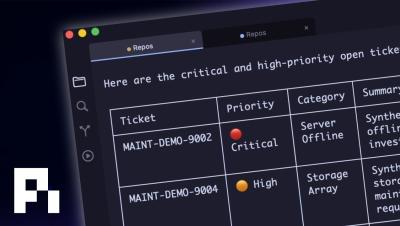
Pi Coding Agent: The Claude Code Alternative That Builds Itself
Pi is a minimal coding agent that lets you choose the features Claude Code and Codex bake in for you. Nothing is forced, nothing is hidden, and you decide what your harness does. However, Pi runs with no safety rails by design, so the environment has to be the boundary. In this video, we'll take a look at Pi, what it is, its features, how to get your own customized setup running, and why it works so well with isolated agentic environments like Beams.

Best Software Composition Analysis Services: Top 8 in 2026
Software Composition Analysis (SCA) services are automated tools that scan codebases to find, identify, and manage open-source components, detecting security vulnerabilities (CVEs), licensing issues, and outdated libraries. They help teams maintain secure, compliant software by creating a software bill of materials (SBOM) and shifting security left in the development lifecycle (DevSecOps). Top providers include Mend.io, Snyk, and Checkmarx.

Certificate lineage: the concept your tools already use but nobody named
The word “certificate” means too many different things. When someone says “the certificate for example.com,” they might mean the public key the CA signed. They might mean the key-pair sitting on the filesystem. They might mean the signature that expires in 47 days. Or they might mean all the things together, that you’ve been renewing for the last 10 years. That last one doesn’t have a name in any PKI standard. And it should.

Claude Opus 4.8: Can It Finally Write Secure Code?
We put Anthropic’s new Claude Opus 4.8 to the test using our standard benchmark: building a secure, production-ready Notes app. Anthropic claims this model is four times less likely to let security flaws slip through. Operating on "Ultra Code" mode, the AI navigates environment blocks, writes its own E2E security test suite, and runs dependency audits. We walkthrough the final app and run a security scan using the Snyk CLI to see if Claude's code is truly safe to deploy.

Why Businesses Are Choosing Utah Colocation Services for Reliable Data Infrastructure
As businesses continue to generate more data and demand higher uptime, the need for secure and scalable infrastructure has become more important than ever. Companies looking for reliable hosting environments are increasingly turning toward Utah colocation services because of the region's low disaster risk, affordable power costs, and strong network connectivity. Whether you are managing enterprise applications, cloud infrastructure, backups, or mission-critical workloads, choosing the right Utah data center provider can significantly improve performance, security, and operational efficiency.


How to Eliminate Shared Database Passwords: MySQL, PostgreSQL, and More
Traditionally, engineers have relied on shared database passwords. When someone needs to run a query, they either already have standing access granted via a static credential everyone on the team knows, or someone has to scramble to create a quick workaround. Every new user, exception rule, or port forward through a bastion host becomes a “just this once” fix.