Security | Threat Detection | Cyberattacks | DevSecOps | Compliance

How Attackers Use Developer Machines to Breach the Software Supply Chain - May 07, 2026

In April, three major supply chain campaigns hit npm, PyPI, and Docker Hub in just 48 hours, and while the ecosystems were different, the objective was the same: steal credentials from developer environments and CI/CD pipelines. The malware targeted API keys, cloud credentials, SSH keys, GitHub tokens, npm tokens, environment variables, and more, turning developer machines and build systems into high-value credential vaults for attackers.

Meet GitGuardian's AI Assistant: Natural Language Queries Across All Your Incidents

See how the GitGuardian Assistant helps teams investigate, understand, and remediate secret incidents directly from the GitGuardian workspace. In this preview, Mathieu and Dwayne walk through how the assistant uses incident context, workspace details, and GitGuardian documentation to answer questions, suggest next steps, and help manage incidents through natural language. It can explain threat patterns, assess scope and impact, recommend remediation steps, assign incidents, update tags, and propose changes to incidents.

Mend.io and GitHub Partner to Bring Mend Renovate Cloud to Open Source Maintainers

At Mend.io, we understand better than some the weight that sits atop the shoulders of open source maintainers who support the ecosystem at large. These maintainers need to keep on top of supply chain security best practices, keep their dependencies up-to-date, taking on new contributions from users, all the while trying to squeeze that into their “off hours”.

OpenShift Virtualization Backup: How to Protect VMs After Migrating from vSphere

Most OpenShift Virtualization projects start with a simple goal: move virtual machines off a traditional hypervisor and onto a Kubernetes-based platform without forcing every workload to be rewritten. That is a practical goal. Many organizations have VM estates that will not become containers any time soon, and OpenShift Virtualization gives infrastructure teams a way to run those VMs next to containerized applications on the same operational platform.

Privacy and Data Residency for AI Agents: What GDPR Requires That Static Controls Can't Show

The residency evidence GDPR and the EU AI Act now expect lives in the runtime trajectory of every AI agent execution, not in the deployment configuration. Your residency compliance dashboard — every workload in eu-west-3, sovereign cloud configured, SCCs signed — cannot produce it. Your AI agent’s last thousand inferences crossed an external border, on average, eight times each. The translation API routed through us-east-1 when the EU endpoint hit capacity.

Why Editing IAM Policies Won't Fix Your AI Agent Identity Problem

Editing IAM policies cannot fix the most common architectural mistake in shipping AI agents on Kubernetes. It happens in thirty seconds: a platform engineer reuses an existing ServiceAccount with an IRSA annotation for Bedrock access because creating a new one takes thirty minutes plus a Terraform pull request. The new agent ships under the existing identity.

AI Agents in the Cloud: A Risk Management Framework for Security Leaders

Your risk committee meets Thursday. The agenda has a new item: AI agent risk posture. You open the register. The fraud detection agent shipped in March is on it. So is the customer service agent. Neither row is useful — “likelihood: medium, impact: high, control: service account scoped via IAM.” Three months ago that was approximately right. Last week the platform team added two MCP connections, the model was upgraded, and the agent now touches data classes the entry never anticipated.

Incident Response: Keeping Cool When Everything's on Fire

The DevOps revolution broke down the traditional silos between development and operations, fundamentally reshaping how we build and maintain software. But with this evolution came an inevitable, and often stressful, reality for many engineers: being on-call and responding to incidents. In this session, Daljeet Sandu will explore how on-call has evolved in recent years, highlight proven best practices, and share insights into the future of incident response in DevOps.

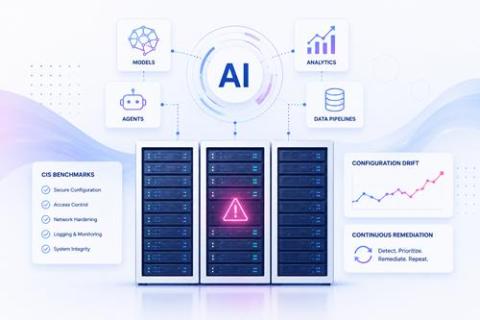
How to Harden AI Agents in Cloud Environments: The 9 Capabilities Your Stack Must Provide

Most “hardening” advice for AI agents is a checklist of things to configure before the agent runs. CIS Kubernetes Benchmark gates. Pod Security Standards baselines. NetworkPolicy templates. None of it’s wrong — it’s just one of four phases, the one your stack already covers. The other three are Observe, Enforce, and Reconcile. They’re where AI agents actually get breached, and they’re where most stacks have nothing.

AI Agent Security Performance: Framework for Evaluating Latency, Throughput, and Observability Overhead

Every AI workload security PoC reaches the same conversation. Platform engineering pushes back: the AI team won’t accept extra latency on inference. The security engineer hunts for benchmarks and finds a contradiction. Langfuse publishes 15% overhead. AgentOps publishes 12%. The security vendor quotes 1–2.5%. None is lying. They measure different layers.