Security | Threat Detection | Cyberattacks | DevSecOps | Compliance

New in ggshield 1.51: Codex Hooks, MCP Discovery, and SLSA Provenance

ggshield 1.51 is here with better support for AI-powered development and browser-less environments. This release adds Codex hook support, MCP server detection across Claude and Cursor, and `ggshield auth login --method oob` for SSH sessions and headless servers. It also strengthens trust in the ggshield supply chain with GitHub Artifact Attestations for release binaries, improves plugin management through your authenticated GitGuardian instance, adds a `vscode` alias for Copilot hook installation, and shows workspace ID in `ggshield api-status`.

Remote Access That Works Behind NAT, CGNAT, and Uncontrolled Firewalls

A device in your fleet encounters an issue. You try to SSH in only to discover that the IP changed overnight, the customer's firewall blocks inbound connections, and the VPN they set up six months ago stopped working when the device switched from Wi-Fi to cellular. The next several hours disappear into a Slack thread with the customer's IT team trying to get a port opened. Every engineer who has shipped hardware into a customer's environment has a version of this story.

You probably don't need private PKI for internal infrastructure

Running your own certificate authority sounds like the responsible choice for internal infrastructure. Distribute your root cert to every machine and issue certs internally. In practice, you spend the next six months chasing down every device, contractor laptop, and vendor console that didn’t get root installed. The warnings come back. And when they do, people click through them, because they always have. There’s a simpler path, and most teams don’t know it exists.

Developers Are Installing AI Agent Skills Too Fast

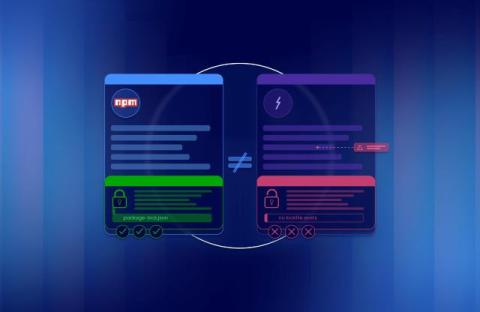
235,000 installs per week. That’s how quickly developers are downloading AI agent skills — packages that give AI coding agents new capabilities like shell access, file system operations, cloud access, and deployment permissions. But unlike traditional npm packages, agent skills introduce a completely new security problem: natural language instructions that AI agents can interpret and execute autonomously.

AI Agent Governance: From Policy Framework to Runtime Enforcement

Most enterprise AI agent governance programs publish policies at the bottom three rungs of a runtime enforceability ladder while their architecture diagrams claim rung four. Almost no program reaches rung five, the only rung that produces evidence an auditor cannot dispute. The mismatch shows up in the audit committee meeting. The CISO walks in with the NIST AI RMF mapping, the AUP, the model cards, and the vendor risk assessments for every third-party API the agents call.

Can Existing CNAPPs Secure AI Agents in Cloud Environments? Where Each Domain Stops

A CNAPP isn’t a single instrument. It bundles five separately-instrumented security domains — CSPM, CWPP, CIEM, CDR, and a fifth add-on module marketed as AI security — each watching a different observation point. So when leadership asks whether your CNAPP can secure the AI agents your team has shipped, you don’t get one answer. You get five.

Laravel-Lang Composer tag-rewrite Supply Chain Attack

On 2026-05-22, an attacker rewrote every repository tag across four Composer packages in the Laravel-Lang ecosystem to point at malicious commits. The affected packages are laravel-lang/lang, laravel-lang/attributes, laravel-lang/http-statuses, and laravel-lang/actions. The rewrite took place on 2026-05-22 into the early hours of 2026-05-23. Every malicious commit makes the same two-file change: one entry added to composer.json, and one new file at src/helpersphp.