Security | Threat Detection | Cyberattacks | DevSecOps | Compliance

The Latest Cybersecurity News & Insights From Around The World



From Developer to Cybersecurity Without Certs - Ed Urbasius' Story | Secrets of AppSec Champions
As the cybersecurity industry grows, more professionals are breaking into security from nontraditional backgrounds. In this episode, Edvinous Urbasius, a former developer turned cybersecurity consultant, shares his unfiltered story of how he got into the field without certifications—and what he learned on the job in a SOC.

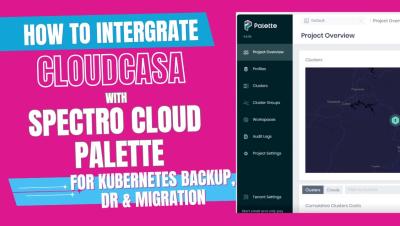
How to Integrate CloudCasa with Spectro Cloud Palette for Kubernetes Backup, DR & Migration
In this technical demo, Martin Phan, Field CTO at CloudCasa, walks you through how to integrate CloudCasa, a powerful Kubernetes backup and disaster recovery solution, with Spectro Cloud Palette. Learn how to streamline your backup, disaster recovery, and migration workflows for Kubernetes clusters. What You’ll Learn: Whether you're managing Kubernetes clusters on Azure or any hybrid setup, this video will help you enhance your Kubernetes data protection strategy using Spectro Cloud + CloudCasa.

Become The Master Of Disaster: Disaster Recovery Testing For DevOps
Once we say Disaster Recovery, we imagine that if something goes wrong – unexpected deletion or other human error, ransomware attack, outage, etc. – we can restore our data immediately. But is it so in practice? Only if you have a reliable backup for your DevOps stack and a tested DR plan for every critical scenario… According to Backblaze’s report, only 42% of organizations that experienced data loss managed to restore all their data.

The One Tool Every Developer & Analyst Uses #cybersecurity #google
Mend.io, formerly known as Whitesource, has over a decade of experience helping global organizations build world-class AppSec programs that reduce risk and accelerate development -– using tools built into the technologies that software and security teams already love. Our automated technology protects organizations from supply chain and malicious package attacks, vulnerabilities in open source and custom code, and open-source license risks.

Best AI Red Teaming Services: Top 6 Platforms and Services in 2025
AI red teaming services involve security assessments focused on artificial intelligence systems. Unlike traditional red teaming, which targets general IT infrastructure, AI red teaming targets the unique attack surfaces and risks associated with AI, large language models (LLMs), and machine learning deployments. These services simulate adversarial attacks, probing for vulnerabilities like prompt injection, data leakage, bias, and malicious manipulation.

Eliminate the BOREDOM and Focus on the FUN: How to Use OpenAI Codex Cloud
In this video, I dive into OpenAI's Codex Cloud, showcasing how you can write, edit, and run code with the power of AI—directly in your browser. Whether you're a developer, student, or just curious about what AI can do for coding, this walkthrough gives you a hands-on look at how Codex Cloud makes programming faster, smarter, and easier.
Best Software Composition Analysis (SCA) Tools: Top 6 Solutions in 2025
Quick Answer: The top SCA tools in 2025 are Mend.io (best for automated remediation and proactive SCA), Sonatype Lifecycle (known for enterprise policy management), Snyk (known for developer experience), and Checkmarx SCA (known for comprehensive coverage). According to industry reports, organizations using SCA tools can reduce vulnerability remediation time by up to 80%.

Why AI Security is Suddenly a Big Deal
Mend.io, formerly known as Whitesource, has over a decade of experience helping global organizations build world-class AppSec programs that reduce risk and accelerate development -– using tools built into the technologies that software and security teams already love. Our automated technology protects organizations from supply chain and malicious package attacks, vulnerabilities in open source and custom code, and open-source license risks.