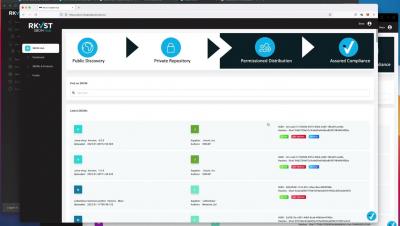
The whole point of an SBOM is lost if you keep it a secret. Here we reveal our secrets of the ideal SBOM exchange. Let us know if we’ve missed anything in RKVST SBOM Hub. SBOMs are made for sharing and are the gifts that keep on giving, but only if they get to the right place at the right time to drive the right critical decision. The first critical decision, or moment of truth, is whether to buy a vendor’s product.
At first glance, DevSecOps and Agile can seem like different things. In reality, the methodologies often complement each other. Let’s see how. Agile is a methodology that aims to give teams flexibility during software development. DevSecOps is about adding automated security to an existing automated software development process. Both are methodologies that require high levels of communication between different stakeholders and continuous improvement as part of the process.
Traditionally, most organizations have had siloed departments wherein teams’ activities are highly separated and the objectives within organizational structures are divided. This operational methodology has brought about friction – especially within the IT department, where developers and ITOps lack collaboration.
DevOps and Security. One encourages speed, agility, iterative learning, enabling technology to keep up with the pace of business. The other wants to keep you safe, slows things down, crosses all the T's and dots all the I's. They seem to be at odds with one another — but do they need to be? DevSecOps says no, that’s not the way it has to be.
Microsoft Azure is a great choice for enterprises looking to quickly build and deploy apps to the cloud. However, cloud teams must simultaneously consider how to implement DevSecOps practices to reduce, manage and avoid risks. Sysdig is collaborating with Microsoft to simplify cloud and container security and deliver robust SaaS-based solutions for the Azure ecosystem.
I talk to a lot of engineers every day. SREs. Systems Architects. Security Engineers. What I am hearing from them is that they are moving away from passwords — both in their personal lives, opting for more secure forms of authentication like biometrics and second factors, and at work. It just doesn’t make sense anymore to protect your personal bank with a second factor, but to share around an SSH key to access critical server infrastructure.
The timing of CISA’s SBOM-a-rama today and tomorrow coincides with the fallout from the “vulnerability of the decade” gifting the industry with yet another example of why scaling and operationalizing the widespread use of SBOMs is so vital. Log4Shell is a 10/10 vulnerability in a hugely popular Java logging library – Log4j – used in virtually every online service. For two decades it was considered harmless, that is until last week when somebody found it wasn’t.