Security | Threat Detection | Cyberattacks | DevSecOps | Compliance

Cybersecurity for Oil and Gas: An Overview

The growing value of business data, the vulnerability of networked systems, and the importance of fuel infrastructure have made oil and gas companies major targets for malicious hackers. Already, the industry has been the victim of several high-profile attacks. The Colonial Pipeline hack compromised the business’s networks, shut down its operations, and deprived the East Coast of a pipeline that supplies nearly half the region’s fuel.


Discover PII Data in Microsoft Exchange Online With Egnyte

Your organization runs on information, and much of that information is sensitive. You need consistent governance policies to protect users and data, but just protecting files is not enough. You also need to be able to scan your documents quickly and easily to find personally identifiable information (PII). More than three-quarters of companies have files housed in email repositories, and these often contain customer PII, health records, and other sensitive information.

Debunking the Myths about Air Gaps

The air gap, a cybersecurity countermeasure that isolates digital assets to put them out of reach of malicious actors, is the subject of many industry myths. Are you confused by all the myths around air gaps? Does it seem odd that logical air gaps are not considered air gaps in spite of their ability to defend against attacks? If you answered “yes” to these questions, you're likely not alone.

3 Tips for Negotiating Permanent Flexible Work Status

It’s finally happening. More than a year after embarking on “the world’s largest work-from experiment,” many businesses are bringing people back to the office. For some, this is excellent news. They’ve been looking forward to highway commutes, in-person meetings, and always valuable watercooler talk. These people are in the minority.

Understanding business and security risk

Even if an organization has developed a governance team, aligning integration decisions with business needs must be incorporated into the zero trust architecture. The company’s business model drives the applications chosen. The senior leadership team needs someone who can translate technology risks and apply them to business risks. For example, security might be an organization’s differentiator.

Sharing Is At The Heart Of SBOM Value

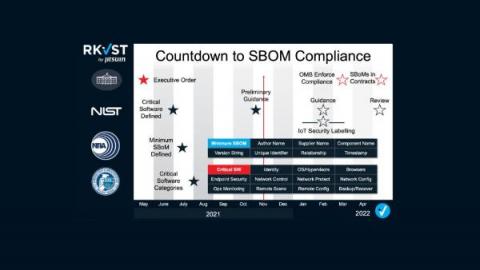
The Presidential Executive Order made it clear that the status quo, where the hidden vulnerabilities in cyber supply chains left doors wide open to attackers, can no longer be allowed to persist. It correctly identified transparency as the key principle to build trust and Software Bills of Material as a critical first step of the solution. But while much of the current debate is focused on how to build SBOMs, further and deeper thinking is needed on how to share them.

Beware the Data Ditch!

More than half of businesses are in the “Data Ditch”. More than half of businesses have started to invest in their Data Maturity and have begun to make smarter, wider use of their data. And by more than 10 metrics of business performance, they are worse off than if they had not bothered. Meanwhile, a third of businesses have come out the other side and have seen dramatic upticks to their performance. and more...

What is Your Security Strategy for 2022? 3 Ways to Keep Up With the Threat Landscape

Digital transformation was well underway before the pandemic and in order to enable remote work and e-commerce, organizations have been adding new digital offerings at an unprecedented rate. Businesses are growing increasingly reliant on digital infrastructure with the expectation to secure a shifting cloud while managing a hybrid workforce and a growing IoT.

2022 Cybersecurity predictions

In 2020, we saw cybersecurity move from a technical problem to become a business enabler. In 2022, we will see 5G go from new technology to a business enabler bringing previously unimaginable use cases because of its high bandwidth and lower latency. Data from the current AT&T Cybersecurity Insights Report shows that 5G technology is being driven by the line of business and has been siloed between IT and OT organizations.