Security | Threat Detection | Cyberattacks | DevSecOps | Compliance

How to Automate Repository Backups to Minimize Data Loss and Downtime

In modern CI/CD pipelines, source code moves fast, and repository state changes constantly. Manual backups are inherently fragmented, error-prone, and incapable of capturing platform metadata at scale. To prevent critical data loss and ensure rapid failover, engineering teams must automate their repository backups.
AI Security in DevOps: Best Practices to Follow

Attacking a CI/CD pipeline used to require a specialist who understood Git internals, cloud identity, and the way build runners handle secrets. That is no longer true. The barrier to entry for an advanced attack has dropped to the level of writing prompts in English. Automation itself is not new to DevOps, but AI has raised its ceiling on both sides of the fence.

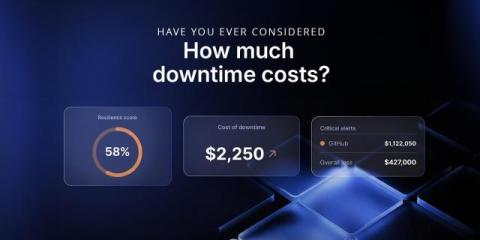
Have you ever considered how much downtime costs?

9,255 hours and 26 minutes. That’s the combined downtime and degraded service duration that GitHub, GitLab, Bitbucket, Azure DevOps, and Jira publicly reported in 2025, across 607 incidents tracked in our DevOps Threats Unwrapped 2026 report. Critical and major incidents rose 69% year over year, with overall incident volume growth at 40%—a trend that cannot be ignored and a related cost that must be properly measured.

8 Best AI Tools for DevOps in 2026

Building an effective AI DevOps stack in 2026 comes down to balancing platform-native assistants for workflow speed with specialized engines for security, infrastructure, and delivery governance. This guide evaluates the 8 leading tools across both categories to help you select the right mix for your architecture and security requirements. This approach reflects a fundamental shift in engineering capabilities.

24 Hours to Paralysis: 87% of Automakers Cannot Survive a Day of Operational Downtime

Two hours of downtime is all it takes to plunge nearly 1 in 5 automakers into an immediate crisis, while 87% cannot sustain an outage beyond 24 hours. With 78.5% of companies running unsegregated IT/OT networks and 5 in 9 of plant managers unprepared for ransomware, a single cyber incident now threatens rapid assembly line paralysis across the supply chain.

Does It Make Sense to Pay a Ransom? A C-Suite Guide to DevOps Resilience

When ransomware hits, decision makers face an impossible ultimatum: pay the ransom or lose business operations. In software development, data criticality also comes to the forefront. That’s because source code isn’t just some trivial data, but primary intellectual property and a revenue driver. Let’s see what’s exactly at stake and how you can minimize the risk of paying a ransom for your tech business.

GitProtect vs. Native Microsoft 365 Backup

Organizations often assume their Microsoft 365 assets are fully protected by native backup tools. However, while Microsoft does offer advanced built-in backup and recovery features, relying solely on a native approach is not a substitute for an independent, enterprise-grade backup strategy. The risks of relying on a single ecosystem for backups are escalating.

GitHub Enterprise Cloud with Data Residency

GHE.com introduces migration, identity, and integration changes.– Some GitHub data may still be processed outside the chosen region.– ta residency still needs a separate backup and recovery strategy. For many enterprises, GitHub is now one of the most important parts of the DevOps ecosystem, where teams manage repositories, pull requests, issues, workflows, GitHub Actions, security alerts, project data, and other metadata that keeps software delivery moving.

SaaS Doesn't Mean Secure: Why You Should Back Up Your Source Code

Your source code sits on GitHub, GitLab, Bitbucket, or Azure DevOps, along with your pipeline configurations, issue history, permissions, and metadata. Most teams assume it’s safe there because it works. But is it? Financial institutions, technology companies, and software houses all build the systems they run on. Code stopped being a byproduct of the business and became the business. And as it turns out, it needs protection of its own.